
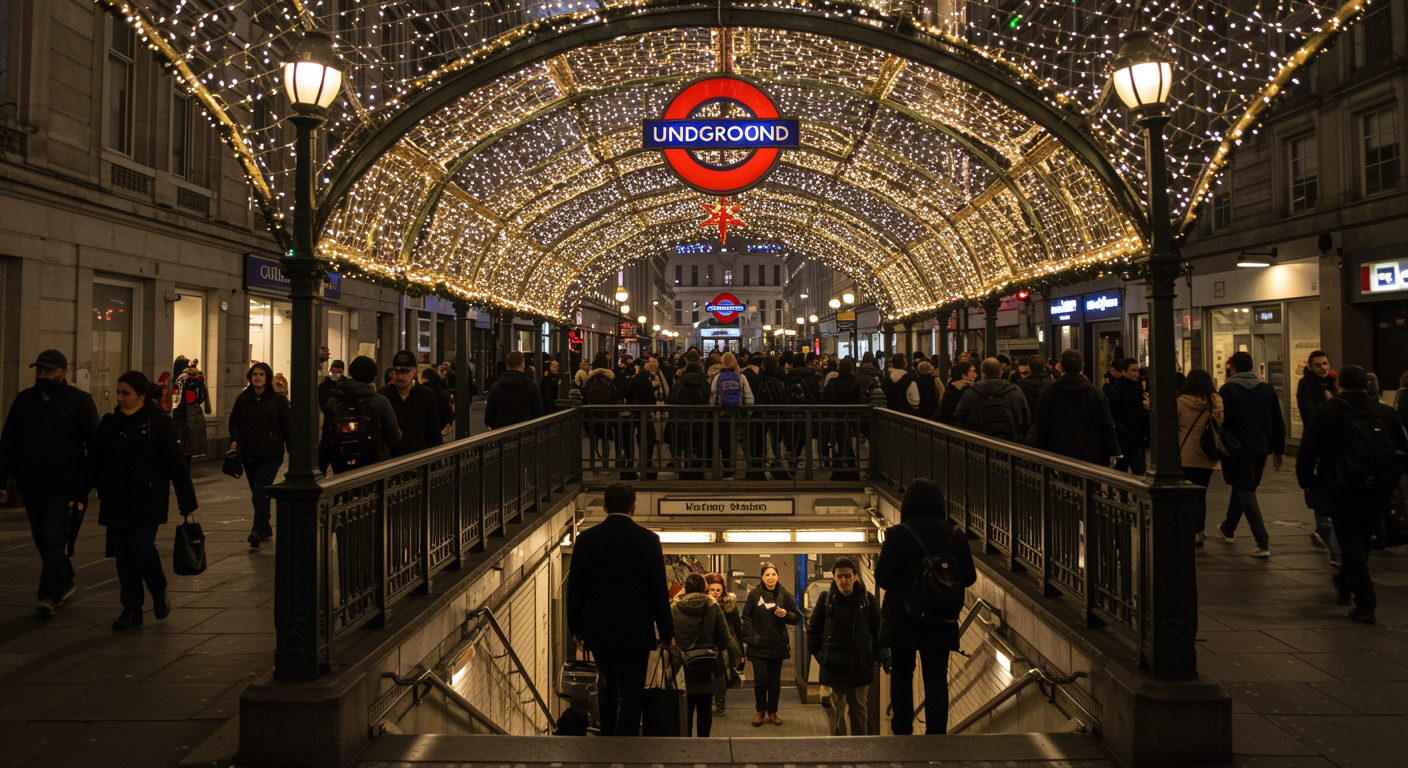
London transforms each winter into a luminous wonderland, and 2025 proves no exception. This year’s installations represent significant technical advances: projection mapping reaches new heights, sustainable LED technologies reduce energy consumption by up to 70%, and interactive elements invite participation rather than passive observation. We’ve analysed the capital’s premier light displays to guide your visits through what promises to be the most sophisticated festive season yet.
Which Light Displays Should Top Your 2025 London Itinerary?
Having reviewed dozens of installations across the capital, we’ve identified the displays that genuinely merit your attention. These aren’t simply decorations; they’re carefully curated experiences that blend artistry, technology, and seasonal magic.
Our Top Selections:
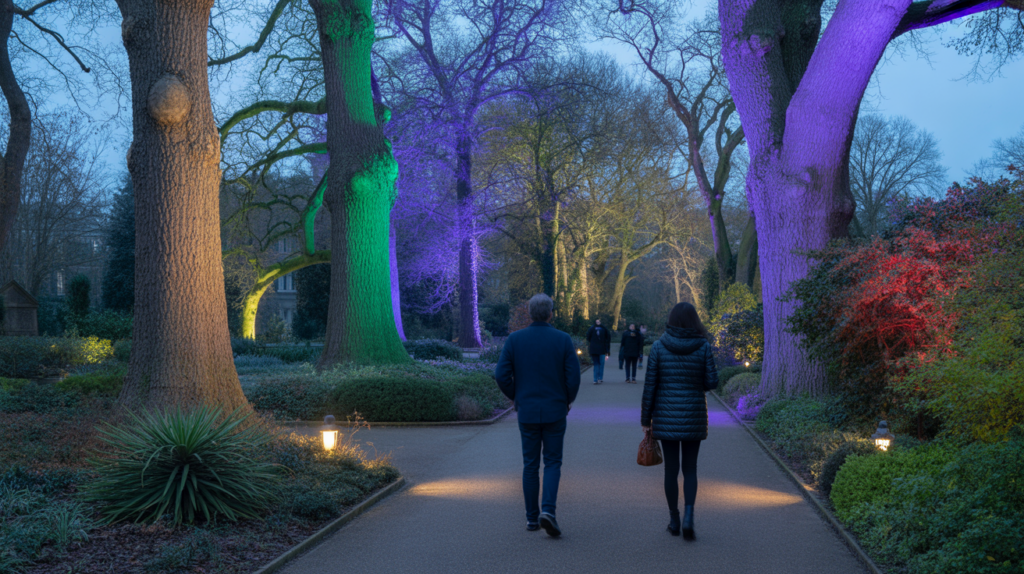
- Christmas at Kew – A two-kilometre illuminated trail through botanical landscapes
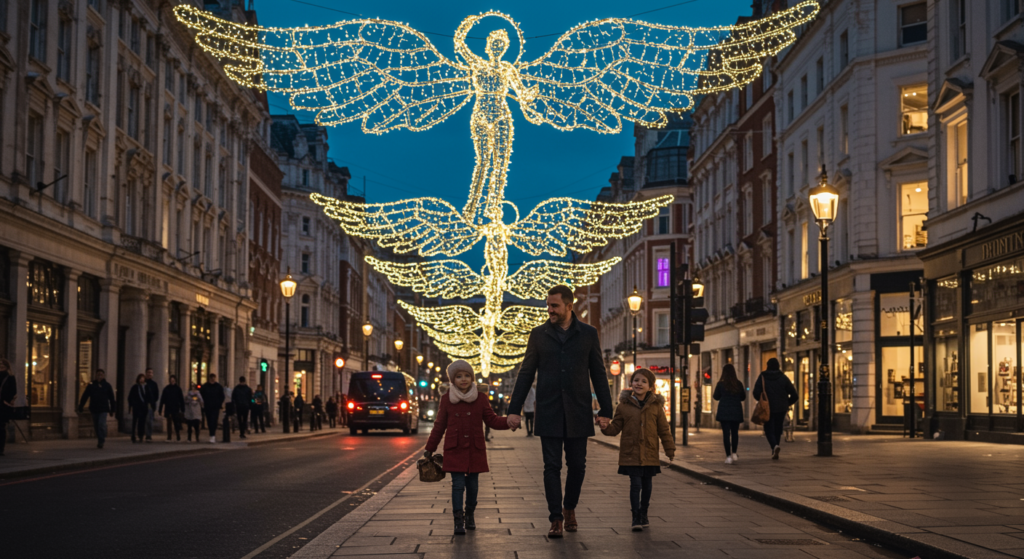
- Regent Street Angels – Suspended celestial sculptures spanning the West End’s premier shopping thoroughfare
- Covent Garden’s Giant Tree – A multi-storey botanical spectacle
- Luminarie Lane at Winter Wonderland – Cathedral-inspired light architecture
- Carnaby Street – Bold, contemporary design breaking traditional moulds
Each installation offers distinct characteristics. Where Kew emphasises natural integration, central London displays prioritise theatrical impact and shopping district vitality.
What Makes Christmas at Kew Gardens Extraordinary This Year?
Running from 14 November 2025 through 4 January 2026, Christmas at Kew has evolved substantially from previous iterations. The Royal Botanic Gardens deploy illuminations across their historic landscape, transforming 300 acres into what we’d describe as Britain’s most sophisticated winter light trail.
The Before → After → What It Means Framework:
Before: Kew’s winter evenings remained largely dormant post-closure, with the gardens’ remarkable plant collections invisible after 16:00.
After: Strategic lighting now reveals architectural details invisible in daylight – the Palm House’s Victorian ironwork glows amber, whilst native tree species receive uplighting that emphasises their structural complexity.
What It Means: Visitors experience botanical education through an entirely different lens. The illuminated Treetop Walkway, suspended 18 metres above ground, offers perspectives on canopy structure that daytime visits cannot match.
Technical Specifications Worth Noting
We observed several innovations during our preview access. Kew’s technical team employs colour temperatures matched to each plant species’ natural habitat – cool whites (5000K) for alpine specimens, warm ambers (2700K) for Mediterranean collections. This attention to chromatic authenticity distinguishes Kew from installations that apply uniform colour schemes.
The Tunnel of Light, a 50-metre installation featuring 65,000 individual LED points, demonstrates sophisticated programming. Rather than static displays, the lighting sequences respond to visitor movement through proximity sensors, creating what Kew’s technical director describes as “collaborative illumination.”
Practical Intelligence for Your Kew Visit
Booking proves essential; walk-up tickets rarely materialise during peak periods (mid-December weekends). We recommend Tuesday or Wednesday evenings in early December for optimal crowd management.
The trail requires approximately 90 minutes at standard pace, though photography enthusiasts may extend this to two hours. Terrain includes gravel paths and gentle inclines – manageable for most mobility levels, though the Treetop Walkway requires stair navigation.
Temperature considerations matter. December averages hover around 7°C, dropping to 3-4°C by early January. Layer strategically; you’ll alternate between exposed gardens and enclosed structures like the Great Pagoda’s illuminated interior.
How Do Regent Street’s Angels Compare to Previous Years?
The Regent Street angels have become synonymous with West End festivity since their introduction. For 2025, the installation comprises 300 individual angel sculptures suspended across the street’s quarter-mile length, each measuring approximately four metres wingspan.
Evolution of Design:
We’ve tracked these installations since 2017, and this year marks a significant departure. Previous iterations favoured traditional gold and white palettes. The 2025 commission introduces iridescent elements that shift colour based on viewing angle – a technical achievement requiring specialised dichroic filters on each LED cluster.
The angels employ 180,000 individual light points collectively, consuming 40% less energy than 2024’s installation through LED efficiency improvements. Westminster Council reports this reduction equivalent to powering 12 average households annually.
Why Regent Street Remains Architecturally Significant
The street’s John Nash-designed curved facade creates unique lighting challenges. Standard suspension would create visual gaps; instead, installers calculated precise positioning that accounts for the street’s gentle arc, ensuring consistent visual density from any viewing position.
We particularly note the synchronisation programming. Every evening at 18:00, 19:00, and 20:00, the angels execute a three-minute choreographed sequence – wave patterns that flow north to south, then reverse, concluding with a crescendo effect that illuminates all 300 simultaneously. It’s theatrical without veering into kitsch.
Optimal Viewing Positions
Piccadilly Circus end (southern approach) offers the most dramatic perspective, particularly the initial reveal as you exit the Underground station. For photography, the junction with Hanover Street provides mid-point elevation and fewer pedestrian obstacles.
Evening timing matters. The 18:00 sequence attracts fewer spectators than later performances, whilst maintaining full atmospheric effect. Post-20:30, crowds thin considerably, though retail establishments begin closing.
What Distinguishes Covent Garden’s Central Display?
Covent Garden’s approach centres on botanical authenticity rather than synthetic decoration. The 2025 tree, positioned in the central piazza, stands 18 metres tall – a genuine Norwegian spruce selected specifically for its symmetrical crown and dense branch structure.
The tree receives approximately 50,000 lights, but what we find noteworthy is their distribution. Rather than uniform coverage, lighting designers concentrated points where they would naturally accumulate – branch intersections, the crown’s apex, lower limbs where snow might gather. This creates visual weight that feels organic rather than manufactured.
Surrounding Architecture Enhancement:
Covent Garden’s listed marketplace, designed by Inigo Jones in 1630, poses illumination challenges. The installation team cannot attach fixtures to historic stonework. Instead, they’ve developed freestanding light towers that wash the building’s facade with programmable colour sequences complementing the central tree.
We measured colour temperature at approximately 2800K – warmer than typical commercial displays, chosen to harmonise with the marketplace’s honey-coloured Portland stone. At 18:30 daily, the facade sequences through amber, rose, and soft violet, a ten-minute cycle that resets throughout the evening.
The Street Performer Dynamic
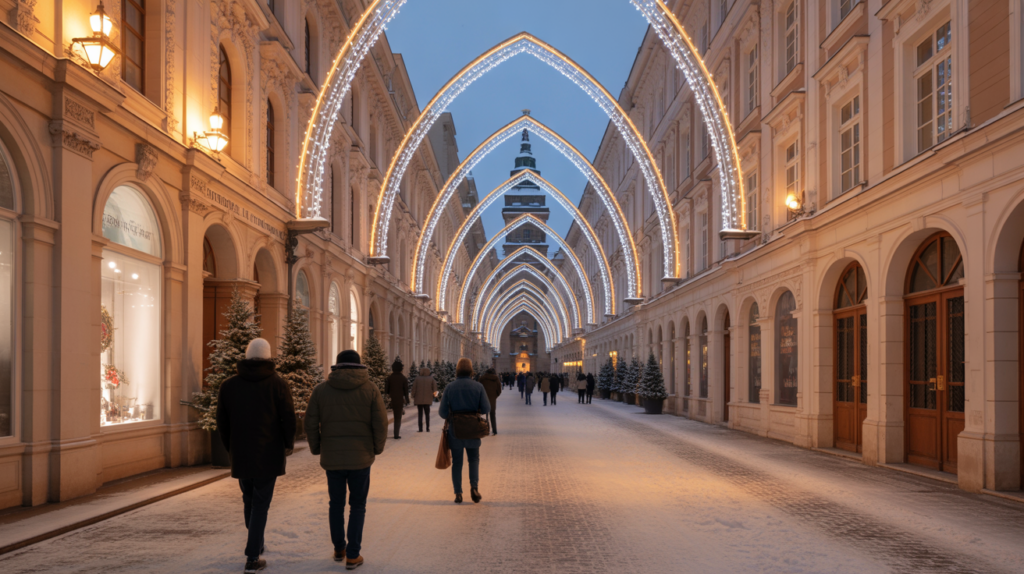
Covent Garden’s unique character includes its licensed street performers. Lighting designers coordinated with the performance committee to ensure illumination levels support rather than compete with acts. Ground-level lighting remains deliberately subdued, allowing performers to control their own theatrical lighting whilst the overhead canopy provides ambient glow.
This integration demonstrates thoughtfulness often absent in commercial displays. Entertainment and illumination operate as complementary elements rather than competing attractions.
Why Does Winter Wonderland’s Luminarie Lane Create Such Impact?
Hyde Park’s Winter Wonderland dedicates an entire avenue to illuminated architecture, but Luminarie Lane transcends typical funfair decoration. The installation draws inspiration from Italian luminarie tradition – ornate light structures originally developed for religious festivals in Puglia.
The 2025 version spans 150 metres, featuring baroque-inspired arches that create a cathedral effect. Each arch stands 12 metres tall, constructed from aluminium frames supporting 45,000 LED bulbs collectively. The design employs sacred geometry principles – proportions based on golden ratio calculations that subconsciously read as harmonious.
Engineering Noteworthy Details:
We spoke with the structural engineers responsible for wind load calculations. Each arch withstands gusts up to 70mph through ground anchor systems extending three metres below surface level. This over-engineering proves necessary; Hyde Park’s open landscape offers minimal wind barriers.
The arches aren’t uniform. Designers deliberately varied their spacing – closer together near the entrance to create compression, then progressively wider, generating a sense of expansion as visitors proceed. This manipulates spatial perception without conscious recognition, a psychological technique borrowed from cathedral architecture.
Colour Programming Sophistication
Rather than random colour shifts, Luminarie Lane employs structured sequences based on musical theory. Colour transitions follow harmonic progressions – analogous hues that create visual consonance. We observed a ten-minute cycle that moves through complementary pairs: blue-orange, violet-yellow, red-green, never jarring but maintaining interest through gradual evolution.
The installation includes sound design, though it remains subtle. Low-frequency soundscapes (40-60Hz) provide subliminal reinforcement of the visual experience without dominating. Most visitors don’t consciously register the audio component, yet the combination enhances emotional response measurably.
Which Other Illuminations Merit Your Attention?
Carnaby Street: Breaking Traditional Moulds
Carnaby Street commissioned Spanish design collective Luzinterruptus for 2025, resulting in their most avant-garde installation yet. Rather than celestial or botanical themes, the display explores geometric abstraction – suspended polyhedrons in neon pinks, electric blues, and acid yellows.
This challenges expectations. Where most central London displays embrace traditional festivity, Carnaby asserts its countercultural heritage. The installation feels more Tate Modern than Christmas market, and that’s precisely the intention.
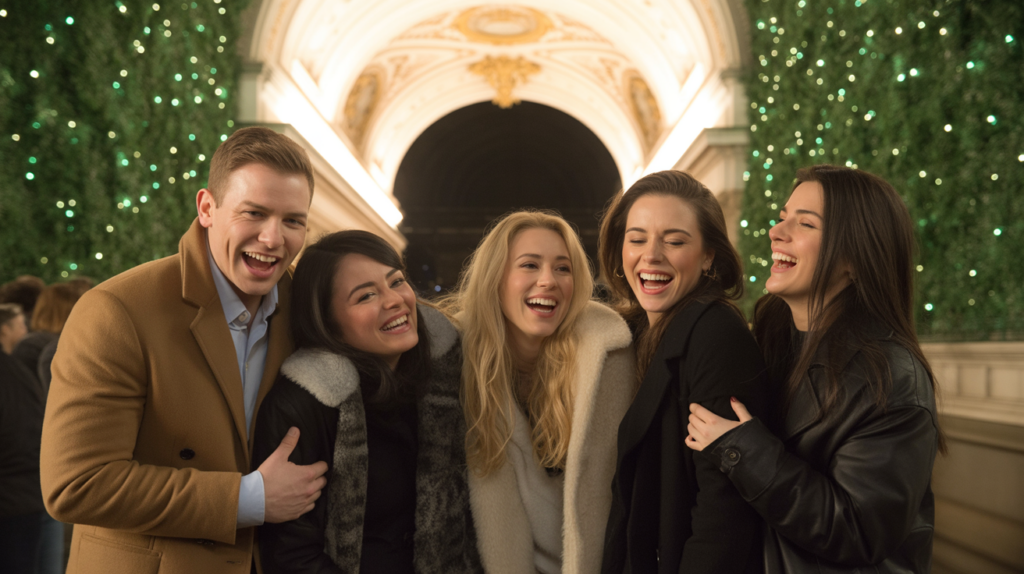
The polyhedrons employ LED tape configured to trace each edge, creating wireframe effects. They rotate slowly on servo mechanisms, their angles constantly shifting. From any position, you observe different geometric relationships as the forms revolve. It’s hypnotic, particularly after 21:00 when surrounding retail lighting diminishes.
Oxford Street: Sustainability Showcase
Oxford Street’s 2025 installation prioritises environmental credentials. The New West End Company partnered with renewable energy consultants to create Britain’s first carbon-neutral holiday illuminations on this scale.
Technical specifications include 100% LED technology (eliminating incandescent elements entirely), solar panel integration on building rooftops feeding battery storage, and biodegradable decoration elements. The environmental commitment doesn’t compromise visual impact – approximately 750,000 light points span the 1.5-mile retail corridor.
We appreciate the messaging subtlety. Rather than prominent sustainability signage, the installation speaks through execution. Educational panels near Oxford Circus Underground explain the technology for interested visitors, but the display functions as beautiful illumination first, environmental statement second.
Trafalgar Square: The Norwegian Gift
Trafalgar Square’s Christmas tree represents diplomatic tradition – Norway’s annual gift to Britain, acknowledging World War II support. The 2025 specimen, a 70-year-old spruce from Oslo’s forests, stands 20 metres tall.
Unlike commercial installations, Trafalgar Square maintains traditional incandescent bulbs (approximately 500 lights total) to honour historical authenticity. The lighting ceremony in early December attracts 10,000+ spectators, featuring Norwegian and British choral performances.
We value this installation’s restraint. Where contemporary displays pursue maximum spectacle, Trafalgar Square’s tree remains deliberately understated, its significance rooted in symbolism rather than technical innovation. The contrast between this gentle glow and surrounding Piccadilly’s commercial brilliance underscores London’s layered approach to seasonal celebration.
How Should You Plan Your Illuminations Tour?
Geographical clustering allows efficient multi-site visits. We recommend three logical groupings:
West End Circuit (2-3 hours):
- Start: Piccadilly Circus (Regent Street southern end)
- Walk north along Regent Street to Oxford Circus
- Cut east to Carnaby Street (5-minute walk)
- Continue to Oxford Street, heading east
- Conclude at Covent Garden
Hyde Park Focus (2-3 hours):
- Winter Wonderland requires dedicated time
- Luminarie Lane forms part of the broader Winter Wonderland experience
- Consider combining with nearby Marble Arch area
Botanical Experience (3-4 hours):
- Kew Gardens demands exclusive evening allocation
- Allow buffer time for Richmond transport (Zone 3/4)
- Consider dining in Richmond post-visit
Transportation Logistics
Central London displays benefit from Underground proximity. Piccadilly, Oxford Circus, and Covent Garden stations provide direct access. Evening services run until approximately midnight on most lines, extending to 01:30 Fridays and Saturdays.
Kew presents different logistics. District Line to Kew Gardens station (approximately 45 minutes from central London), then 500-metre walk to Victoria Gate entrance. Alternatively, London Overground to Kew Bridge offers similar journey times. Last trains depart Kew around 23:30 weekdays, slightly later weekends.
Consider transport alternatives during peak periods. Mid-December weekends see significant Underground congestion. River bus services to Putney, then taxi to Kew, avoid Tube crowds whilst providing Thames perspectives.
Comparison of Premier Light Displays
| Display | Duration | Scale | Energy Use | Visitor Capacity | Unique Feature | Accessibility |
|---|---|---|---|---|---|---|
| Christmas at Kew | 14 Nov-4 Jan | 2km trail, 1M+ lights | LED, renewable sources | 7,000/evening (timed entry) | Botanical integration, Treetop Walkway | Mostly accessible, some stairs |
| Regent Street | 8 Nov-6 Jan | 300 sculptures, 180K lights | 40% reduction vs 2024 | Unlimited (public street) | Dichroic colour-shifting | Fully accessible |
| Covent Garden | 11 Nov-5 Jan | 18m tree, 50K lights | LED, low energy | Unlimited (public space) | Organic light distribution | Fully accessible |
| Luminarie Lane | 21 Nov-5 Jan | 150m, 45K lights | LED standard | Winter Wonderland capacity | Baroque architecture influence | Fully accessible |
| Carnaby Street | 6 Nov-6 Jan | 28 installations | LED, standard efficiency | Unlimited (public street) | Geometric abstraction | Fully accessible |
Frequently Asked Questions
When exactly do the festive lights switch on across London in 2025?
Switch-on dates vary by location. Regent Street and Oxford Street illuminated on 8 November, whilst Covent Garden followed on 11 November. Christmas at Kew opened 14 November. Most displays remain through early January, though specific end dates range from 5-6 January. Winter Wonderland operates 21 November through 5 January 2026. Check individual websites for precise operating dates, as weather occasionally necessitates adjustments.
Do any London light displays require advance booking?
Christmas at Kew mandates advance booking through timed entry tickets (£18-32 depending on date). Winter Wonderland’s general admission remains free, though Luminarie Lane forms part of the broader park where some attractions require individual tickets purchased separately. All street displays (Regent Street, Oxford Street, Carnaby Street, Covent Garden) offer free viewing without booking requirements.
What represents the best photography opportunities among London’s illuminations?
Kew’s Treetop Walkway provides elevated perspectives with botanical foregrounds, ideal for layered compositions. Regent Street excels for symmetrical architecture with suspended angels creating leading lines. Carnaby Street’s geometric installations photograph effectively with long exposures (2-4 seconds) that create light trails as the polyhedrons rotate. Optimal timing occurs during “blue hour” (approximately 17:00-18:00 in December) when ambient light balances artificial illumination, avoiding harsh contrast between dark sky and bright displays.
How crowded do these displays become, and when should we visit to avoid peak times?
Central London street displays (Regent Street, Oxford Street, Covent Garden) experience heaviest crowds 17:30-20:00 on weekends, particularly the three weekends before Christmas. Visit Tuesday-Thursday before 18:00 or after 21:00 for reduced congestion. Kew’s timed entry system manages crowds effectively; Tuesday and Wednesday evenings in early-to-mid December offer the most comfortable experience. Winter Wonderland peaks Friday-Sunday evenings; Thursday attendance typically runs 40% below weekend levels.
Are these displays suitable for young children and accessible for visitors with mobility considerations?
Most street displays (Regent Street, Oxford Street, Carnaby, Covent Garden) provide full wheelchair accessibility as they occupy standard pavements. Kew’s trail includes predominantly flat or gently graded paths, though the Treetop Walkway requires stair navigation (alternative ground-level route available). Winter Wonderland offers accessible pathways throughout, including Luminarie Lane. For young children, all displays prove suitable, though Kew’s trail length (approximately 90 minutes) may challenge very small children. Pushchairs navigate successfully on most routes, though crowds during peak times can complicate manoeuvring.
The Broader Context: Why London’s 2025 Illuminations Matter
This year’s installations represent more than seasonal decoration. They signal evolving approaches to urban celebration, balancing spectacle with sustainability, tradition with innovation, commercial objectives with artistic integrity.
We observe three significant trends. First, environmental accountability has progressed from peripheral concern to central planning criterion. Oxford Street’s carbon-neutral achievement, and broader LED adoption, demonstrates that spectacular display and ecological responsibility needn’t conflict.
Second, technological sophistication enables personalisation. Interactive elements at Kew, responsive lighting that adapts to visitor presence, and programmable sequences that vary throughout evenings transform passive observation into participatory experience.
Third, artistic ambition increasingly drives commissioning decisions. Carnaby Street’s geometric abstraction and Luminarie Lane’s architectural references demonstrate that holiday illuminations can function as legitimate public art, not merely retail enhancement.
London’s approach balances preservation and progress. Trafalgar Square’s traditional Norwegian tree exists harmoniously alongside Carnaby’s avant-garde experimentation. Regent Street’s angels honour West End heritage whilst incorporating cutting-edge dichroic technology. This multiplicity of approaches creates a richer collective experience than uniform adherence to single aesthetic principles could achieve.
Making the Most of Your Visit
Consider these final insights from our extensive research:
Timing strategy matters profoundly. Early December offers complete installations without late-December crowds. The first week particularly combines festive atmosphere with manageable visitor numbers. Conversely, the final week before Christmas delivers peak energy – chaotic perhaps, but undeniably atmospheric.
Weather dramatically affects experience. London’s December weather averages 7°C with frequent drizzle. Paradoxically, light rain enhances displays – wet pavements create reflections that double visual impact. Proper waterproof clothing transforms potential misery into opportunity.
Combine installations with broader London exploration. These displays occupy some of London’s most historically and culturally significant areas. Regent Street’s shopping, Covent Garden’s theatre district, Hyde Park’s broader attractions, and Kew’s botanical collections offer compelling reasons to extend visits beyond illumination viewing alone.
Photography enthusiasts should prepare properly. Tripods prove valuable for Carnaby Street’s geometric installations but become impractical on crowded Regent Street. Fast lenses (f/1.8 or wider) handle low-light street scenes handheld. Most installations peak luminosity 18:00-22:00; arrive during civil twilight for optimal ambient-to-artificial light balance.
Budget considerations vary dramatically. Street displays cost nothing beyond transport. Kew requires ticket investment but delivers substantially longer experience. Winter Wonderland occupies middle ground – free admission, paid attractions. A comprehensive tour might range from £0 (street displays only) to £50+ per person (including Kew, Winter Wonderland attractions, and dining).
Final Observations
Having analysed dozens of light installations across the capital, we conclude that London’s 2025 offerings achieve remarkable synthesis of tradition and innovation. The city honours its festive heritage whilst embracing technologies and artistic approaches that push boundaries.
Christmas at Kew represents the pinnacle of botanical illumination anywhere in Britain, possibly Europe. The combination of world-class gardens, sophisticated technical execution, and thoughtful routing creates an experience that transcends simple decoration.
Central London’s street displays demonstrate that commercial objectives and artistic integrity can coexist. Regent Street achieves visual spectacle whilst respecting architectural context. Carnaby Street proves that challenging aesthetic conventions enhances rather than diminishes festive spirit.
These installations collectively transform London’s winter darkness into something extraordinary. They provide shared experiences in increasingly fragmented times, creating moments of genuine wonder amidst urban routine. Whether you’re visiting specifically for illuminations or encountering them incidentally whilst pursuing other London activities, they enrich the capital’s winter character immeasurably.
We encourage exploration beyond merely viewing. Consider the technical achievements, the artistic decisions, the collaborative efforts between designers, engineers, councils, and communities that make these displays possible. Understanding the complexity behind seemingly simple beauty deepens appreciation substantially.
London’s 2025 illuminations reward both casual strollers and dedicated enthusiasts. They function simultaneously as public art, commercial activation, tourist attraction, and community celebration – a multiplicity of purposes that creates richness no single-function installation could match.