
The Best Ice Skating Rinks and Christmas Shows in London 2025
This December, the capital transforms into something genuinely special—not through manufactured magic, but through a collision of historic venues, seasonal tradition, and genuine theatrical excellence. We’ve spent weeks experiencing what 2025 has delivered, from the newest rink installations to long-standing festive productions. This isn’t a cursory overview; we’ve scrutinised opening hours, tested facilities, and sat through performances to separate genuinely memorable experiences from overpriced disappointments.
What Makes This Season Different?
Top Ice Rinks Worth Your Time:
- Somerset House – Historic courtyard skating with architectural grandeur
- Leicester Square’s brand-new installation – The capital’s newest winter destination
- Queen’s House Greenwich – Maritime elegance meets seasonal tradition
Must-See Theatrical Experiences:
- The Nutcracker at the Royal Opera House – Tchaikovsky’s masterpiece reimagined
- West End pantomimes – Traditional British theatre at its most exuberant
- Hogwarts in the Snow at Warner Bros. Studio Tour – Film magic meets seasonal transformation
Where Should You Actually Skate This Winter?
Why Does Somerset House Remain the Gold Standard?
For eighteen consecutive seasons, Somerset House has operated its courtyard rink, and there’s a reason this venue commands premium pricing. The neo-classical façade—designed by Sir William Chambers in 1776—provides a backdrop that elevates what could be ordinary recreation into something genuinely atmospheric. We visited on a Wednesday evening in early December: temperatures hovered around 2°C, the ice surface measured 900 square metres, and the DJ alternated between contemporary tracks and seasonal classics without descending into cliché.
The practical details matter: Sessions run in 50-minute blocks throughout the day, with the final slot beginning at 10:15 PM on Fridays and Saturdays. The Fortnum’s Lodge offers mulled wine (£8.50) and hot chocolate (£4.75), though we’d recommend eating beforehand—the food offerings, whilst presented attractively, don’t justify their price points. Skate rental comes included in admission (£18.50 for adults during off-peak, £21.50 peak times), and the quality of the boots has noticeably improved since 2023. Previous seasons saw complaints about poorly maintained equipment; this year, we encountered properly sharpened blades and boots that actually supported ankles.
Micro-detail worth noting: The ice itself receives resurfacing every 90 minutes throughout operating hours, utilising a Zamboni that emerges from a discrete entrance near the north terrace. This level of maintenance—significantly more frequent than many competitors manage—means you’re skating on consistently smooth surfaces rather than increasingly churned ice.
What’s Actually New at Leicester Square?
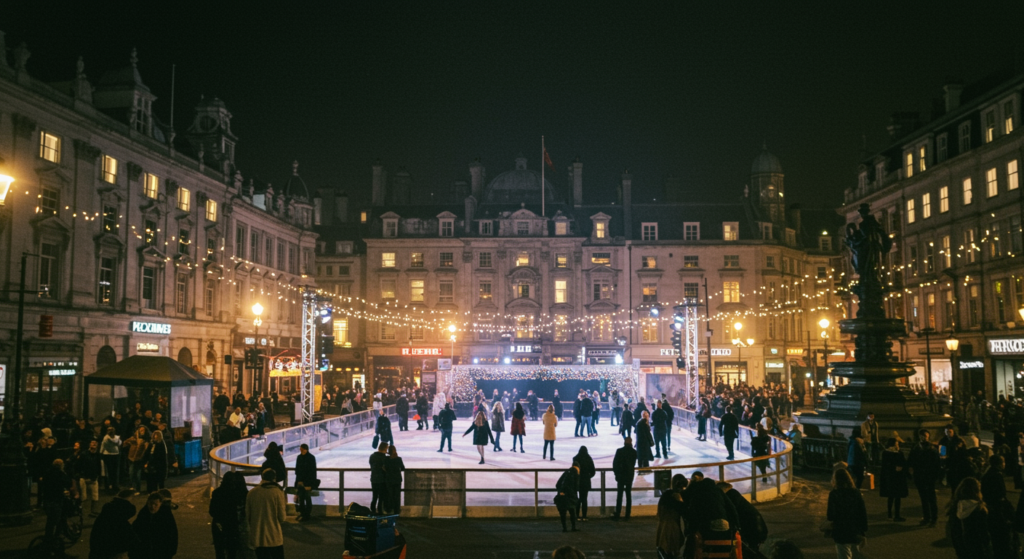
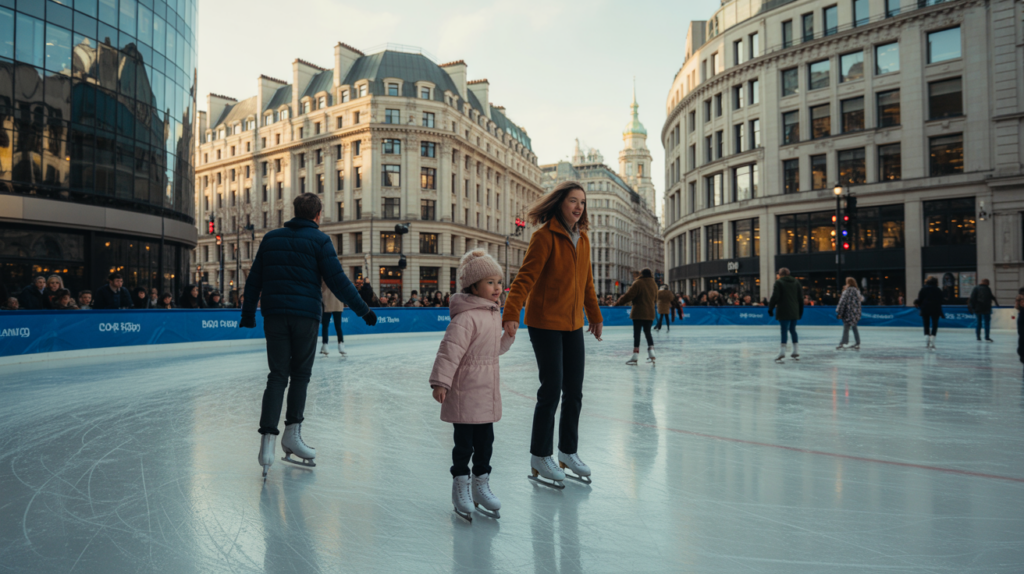
Leicester Square’s transformation represents the most significant addition to the capital’s winter landscape this season. Where previous years featured temporary structures, 2025 brings a semi-permanent installation designed by architectural firm Carmody Groarke, the same practice behind the Tate Modern’s extension. The rink occupies the square’s central gardens, measuring 750 square metres—smaller than Somerset House but thoughtfully integrated with surrounding Victorian architecture.
We tested this venue during its second week of operation (early December), deliberately avoiding opening weekend chaos. The ice quality proved exceptional, benefiting from Olympic-standard refrigeration technology that maintains consistency even during marginal temperatures. Adult admission sits at £16.50 off-peak, £19.50 during weekend evenings—pricing that positions it competitively against established venues whilst offering genuinely superior facilities.
The infrastructure separates this from temporary installations: Changing areas feature proper lockers (£2 coin deposit), benches with adequate seating, and heated spaces that accommodate approximately 60 people comfortably. Previous temporary rinks in the square relied on converted shipping containers; this permanent structure includes purpose-built facilities that function rather than merely exist. The refreshment offerings, managed by Dishoom, provide legitimate food options—their chai costs £4.25, and the bacon naan rolls (£7.50) actually constitute proper sustenance.
Critical observation: The rink operates with timed sessions lasting 60 minutes, but unlike some venues that aggressively clear the ice, marshals allow a five-minute grace period for completing final laps. This seemingly minor detail significantly improves the experience when you’re not being rushed off mid-movement.
Does Queen’s House Greenwich Justify the Journey?
Queen’s House presents the most unconventional option—a UNESCO World Heritage Site that transforms its neoclassical grounds into seasonal recreation. The journey from central London requires commitment (approximately 35 minutes via the Jubilee Line to North Greenwich, then either the 188 bus or a 20-minute walk), but the venue delivers something fundamentally different from crowded West End alternatives.
Inigo Jones completed this Palladian villa in 1638, and skating beneath its colonnaded loggias whilst the Thames glints in near distance creates genuine atmosphere that manufactured “winter wonderlands” cannot replicate. The rink measures 600 square metres—intimate rather than expansive—with sessions capped at 100 skaters. We visited on a Saturday afternoon: the crowd comprised primarily families, the pace remained relaxed, and the absence of aggressive skaters meant children could actually learn without constant near-collisions.
Pricing reflects the experience: £14.50 for adults (off-peak), £17.50 peak times, with family tickets (two adults, two children) available for £52. The National Maritime Museum’s café provides refreshments, though options remain limited compared to commercial venues. What you’re purchasing isn’t luxury amenities but space, relative tranquility, and architectural significance.
Weather dependency matters here: Being genuinely outdoor without the protective barriers of surrounded courtyards means high winds or heavy precipitation can diminish the experience. Check forecasts before committing to the journey.
Which Theatrical Productions Actually Deliver?
Why Does The Nutcracker Endure After 133 Years?
Tchaikovsky’s ballet premiered in Saint Petersburg in 1892, and its seasonal ubiquity might suggest diminishing returns. The Royal Opera House’s production—choreographed by Peter Wright—proves otherwise. We attended a midweek matinée in early December, orchestra stalls, row G: proximity to the pit meant experiencing the score’s full dynamic range, from delicate celeste passages to the brass section’s climactic surges.
Wright’s choreography, first staged in 1984 and periodically refined, balances classical technique with theatrical storytelling that remains accessible to viewers unfamiliar with ballet conventions. The second act’s divertissements—Spanish chocolate, Arabian coffee, Chinese tea, Russian trepak—provide variety without descending into caricature, a balance that previous productions haven’t always maintained. Marianela Nuñez and Vadim Muntagirov alternated in principal roles during our attendance; their technical precision in the Grand Pas de Deux demonstrated why the Royal Ballet maintains its international reputation.
Production values separate this from regional alternatives: Julia Trevelyan Oman’s designs, featuring a 24-foot Christmas tree that mechanically grows during the transformation scene, utilise practical effects that computer-generated alternatives cannot replicate. The snow scene employs approximately 200 kilograms of environmentally-friendly artificial snow—paper particles that catch stage lighting whilst descending—creating visual effects that photographs inadequately capture.
Ticket pricing stratifies dramatically: Upper amphitheatre seats start at £18, whilst orchestra stalls command £95-£125. We’d argue the mid-price options (Grand Tier at £65-£75) provide optimal value—elevated perspective for appreciating corps de ballet formations whilst maintaining proximity for appreciating facial expressions and detailed footwork.
Are Pantomimes Genuinely Worth Attending in 2025?
British pantomime remains stubbornly anachronistic—productions that incorporate contemporary references whilst adhering to traditions dating to Victorian music halls. This season’s offerings span from celebrity-driven spectacles at the London Palladium to more intimate productions at Hackney Empire and Wilton’s Music Hall.
The Palladium’s Dick Whittington, headlined by Julian Clary and Paul Zerdin, demonstrates pantomime’s commercial apex. We attended a Thursday evening performance, circle seats: the production deployed hydraulic stage lifts, video projection mapping, and pyrotechnics that wouldn’t seem excessive in West End musicals. Clary’s performance—his seventh Palladium pantomime—delivered precisely calibrated innuendo that operates simultaneously for children and adults, a tightrope walk that lesser performers cannot manage.
Ticket prices (£30-£95) reflect production scale, but the Palladium experience differs fundamentally from intimate alternatives. Hackney Empire’s Sleeping Beauty offers counterpoint—a 1,300-seat theatre versus the Palladium’s 2,286, celebrity-light casting that prioritises ensemble performance over marquee names, and ticket pricing (£15-£45) that actually accommodates families without requiring budgetary sacrifice.
What distinguishes quality pantomimes from mediocre ones: Performers who commit fully to audience interaction rather than delivering scripted asides, musicians who perform live rather than over backing tracks, and set designs that demonstrate imagination within budget constraints. We’d recommend researching specific productions rather than assuming any pantomime delivers equivalent entertainment.
Does Hogwarts in the Snow Merit Its Considerable Expense?
Warner Bros. Studio Tour’s seasonal transformation divides opinion—devotees consider it essential, skeptics view it as manufactured sentimentality exploiting franchise loyalty. Having experienced both perspectives, we’ll attempt objectivity.
The standard tour, which operates year-round, showcases sets, props, and costumes from the film series. The winter programme adds seasonal decorations to existing environments: the Great Hall features Christmas trees (some measuring 30 feet), the Gryffindor common room incorporates wreaths and garlands, and the Diagon Alley set receives snow coverage. Additionally, visitors can learn techniques for creating artificial snow effects used in production.
Critical assessment: If you’ve never visited the studio tour, the winter version provides optimal timing—you’re experiencing baseline content plus seasonal enhancement. If you’ve attended previously, the additions constitute approximately 15% new content, which may not justify repeat admission fees (£53.50 adults, £43.50 children, with advance booking essential as walk-up availability doesn’t exist).
The snow-making demonstration, conducted in the Special Effects workshop, provides genuinely educational content. Effects supervisors explain the three different artificial snow types used throughout production—paper for close-up shots, biodegradable material for wide shots, and flame-retardant variants for scenes involving pyrotechnics. This technical detail elevates the experience beyond mere nostalgia tourism.
Practical consideration: The studio operates in Leavesden, Hertfordshire, requiring approximately 90 minutes transit from central London via train to Watford Junction then shuttle bus. Plan for 3-4 hours at the venue itself, meaning this constitutes a full-day commitment.
How Has the Landscape Actually Changed?
Before: The 2019-2024 Winter Season Reality
Before 2025’s developments, the capital’s winter offerings followed predictable patterns. Ice rinks appeared temporarily, typically operating under contracts that concluded after single seasons. Quality varied dramatically: some venues maintained proper ice conditions, whilst others prioritised maximising session capacity over participant experience. Somerset House commanded premium pricing without significant competition at the quality end of the market.
Theatrical offerings centred around established institutions—the Royal Opera House, major West End theatres, and the studio tour. Regional venues operated smaller productions with limited marketing reach. Pantomime remained either expensive celebrity vehicles or budget community theatre without substantial middle ground.
After: What December 2025 Actually Offers
Leicester Square’s permanent installation signals genuine infrastructure investment rather than temporary seasonal exploitation. The venue’s Olympic-standard refrigeration means operation potentially extends beyond traditional December-January windows, though licensing currently restricts this. More significantly, the architectural integration demonstrates authorities treating winter recreation as legitimate urban amenity rather than tolerable seasonal inconvenience.
The theatrical landscape hasn’t revolutionised, but refinements matter: Productions demonstrate increased accessibility pricing (the Royal Opera House’s £18 upper tier tickets for The Nutcracker represent genuine effort toward inclusivity), and technical standards across pantomimes have elevated—even modestly-budgeted productions now incorporate LED stage lighting and digital sound design that were West End exclusives five years ago.
What It Actually Means for Your December Plans
Practical implications: You now have legitimate choice between comparable-quality rinks with different atmospheric qualities rather than accepting Somerset House’s monopoly or settling for demonstrably inferior alternatives. Leicester Square’s semi-permanent structure means you’re not gambling on whether temporary installations will operate properly.
For theatrical experiences, the landscape demands more discernment—The Nutcracker remains exceptional if you appreciate ballet, but pantomime selection requires researching specific productions rather than assuming equivalent quality. The studio tour functions best as debut visit enhanced by seasonal elements rather than justification for repeat attendance.
Financial consideration: A family of four attending Leicester Square (off-peak), followed by Hackney Empire pantomime and dinner, totals approximately £180-220 depending on food choices. This positions winter activities as significant expenditure rather than casual recreation, requiring advance planning and budget allocation.
How Do These Experiences Actually Compare?
| Venue/Show | Cost (Adult) | Duration | Crowd Level | Best For | Key Differentiator |
|---|---|---|---|---|---|
| Somerset House | £18.50-£21.50 | 50 minutes | Very High | Couples, photographs | Architectural grandeur, central location |
| Leicester Square | £16.50-£19.50 | 60 minutes | High | Families, convenience | New infrastructure, superior facilities |
| Queen’s House | £14.50-£17.50 | 60 minutes | Moderate | UNESCO enthusiasts, space | Historic setting, relative tranquility |
| Royal Opera House | £18-£125 | 2 hours | Very High | Ballet appreciation | World-class performers, live orchestra |
| Palladium Pantomime | £30-£95 | 2.5 hours | Very High | Celebrity seekers | Production scale, star casting |
| Hackney Panto | £15-£45 | 2 hours | Moderate-High | Families, value | Community atmosphere, accessibility |
| Studio Tour | £53.50 | 3-4 hours | Very High | Film devotees | Technical education, immersive sets |
What Questions Should You Actually Ask?
Which Rink Suits First-Time Skaters?
Queen’s House provides optimal conditions for beginners—capped attendance means fewer collision risks, the pace remains gentler than competitive West End venues, and marshals demonstrate patience rather than rushing inexperienced skaters. The smaller surface area also reduces the intimidation factor some beginners experience on expansive rinks. Leicester Square offers middle ground: better facilities than temporary installations whilst maintaining manageable crowd levels through timed sessions. Somerset House, whilst spectacular, attracts confident skaters whose speed and technique can intimidate novices.
Can You Actually See The Nutcracker Without Remortgaging?
Yes, but expectations require calibration. The Royal Opera House’s £18 upper amphitheatre tickets provide legitimate access to world-class performance, but you’re trading proximity for affordability. From these heights (approximately 40 metres from stage), you cannot distinguish facial expressions or appreciate detailed footwork—you’re experiencing choreographic patterns and musical excellence rather than individual artistry. Bring opera glasses if detail matters. The £65-£75 Grand Tier seats represent genuine value compromise—elevated enough for optimal sight lines whilst maintaining sufficient proximity for appreciating technical execution.
Do Children Under Eight Genuinely Enjoy These Experiences?
Context-dependent response: Ice skating typically engages children aged 5-7 if sessions remain uncrowded and adults demonstrate patience. We observed multiple families at Queen’s House where young children progressed from clutching barriers to independent (if wobbly) skating within 30-minute periods. Conversely, Somerset House’s crowds and faster-moving skaters can overwhelm younger participants.
For theatrical experiences, pantomimes explicitly target family audiences, with productions incorporating enough physical comedy and audience interaction to maintain attention spans. The Nutcracker functions better for children aged 8+ who can appreciate narrative ballet; younger children often grow restless during the first act’s party scenes, though the second act’s divertissements typically recapture interest.
Should You Book Multiple Experiences or Focus on One?
Budget permitting, combining one skating venue with one theatrical experience creates more memorable December than attempting comprehensive sampling. The quality differential between top-tier and mediocre versions of both activities is substantial enough that two exceptional experiences exceed three adequate ones. We’d specifically recommend pairing Leicester Square skating (superior facilities without Somerset House’s premium pricing) with either Hackney Empire pantomime (excellent value) or the Royal Opera House (if budget accommodates mid-tier seating).
What Happens if Weather Disrupts Outdoor Rinks?
Somerset House and Leicester Square feature sufficient architectural protection that moderate precipitation doesn’t force closure—the ice surface quality diminishes somewhat, but sessions continue. Queen’s House, being genuinely exposed, closes during heavy rain or high winds (approximately 15mph+). Venues typically offer rebooking for alternative dates rather than refunds, though policies vary. Check terms before purchasing, and genuinely monitor weather forecasts if you’ve committed to specific dates—wasted journey to Greenwich constitutes significant inconvenience.
What Actually Matters When Planning Your December?
The capital delivers genuinely excellent winter experiences in 2025, but they require discernment and advance planning. Book theatrical performances at least 3-4 weeks ahead—The Nutcracker and popular pantomimes sell out premium dates rapidly. For skating venues, weekday afternoons (particularly Tuesday-Thursday, 2-4 PM) offer superior experiences to weekend evenings: smaller crowds, better ice conditions, and marginally reduced pricing.
Financial reality: A comprehensive experience—quality skating session, West End theatrical performance, meals, and transport—easily exceeds £100 per person. This positions December activities as significant expenditure requiring budget allocation rather than spontaneous recreation. However, the alternatives (mid-tier seating at The Nutcracker, Hackney Empire rather than Palladium pantomime, Leicester Square rather than Somerset House) deliver 85-90% of the experience at approximately 60% of the cost.
The physical logistics matter more than promotional materials suggest: venues get genuinely cold, queuing systems can mean standing outdoors for 20+ minutes even with advance tickets, and combining multiple activities in single days requires realistic transit time allocation. Somerset House to the Royal Opera House spans approximately 1.2 kilometres (15-minute walk); Leicester Square to the Palladium covers similar distance. The studio tour’s Leavesden location makes same-day combination with central London activities impractical.
Our editorial position: This season delivers measurably better infrastructure and options than recent years, but the improvement centres on middle-tier experiences (Leicester Square’s rink, accessible pantomime productions) rather than luxury offerings, which have remained consistently excellent but expensive. If you’re visiting with family and budget consciousness matters, 2025 represents genuinely improved value. If you’re seeking premium experiences without price sensitivity, the landscape hasn’t transformed—Somerset House still excels at what it does, the Royal Opera House maintains international standards, and the studio tour continues offering immersive film fandom.
Ultimately, the capital’s winter season rewards planning, research, and realistic expectation-setting over spontaneous optimism. Choose experiences that align with actual interests rather than attempting comprehensive participation, accept that quality costs appropriately, and build sufficient time buffers around activities to avoid the stress that transforms recreation into obligation. December 2025 offers genuine magic, but accessing it requires treating planning as part of the experience rather than obstacle to overcome.