
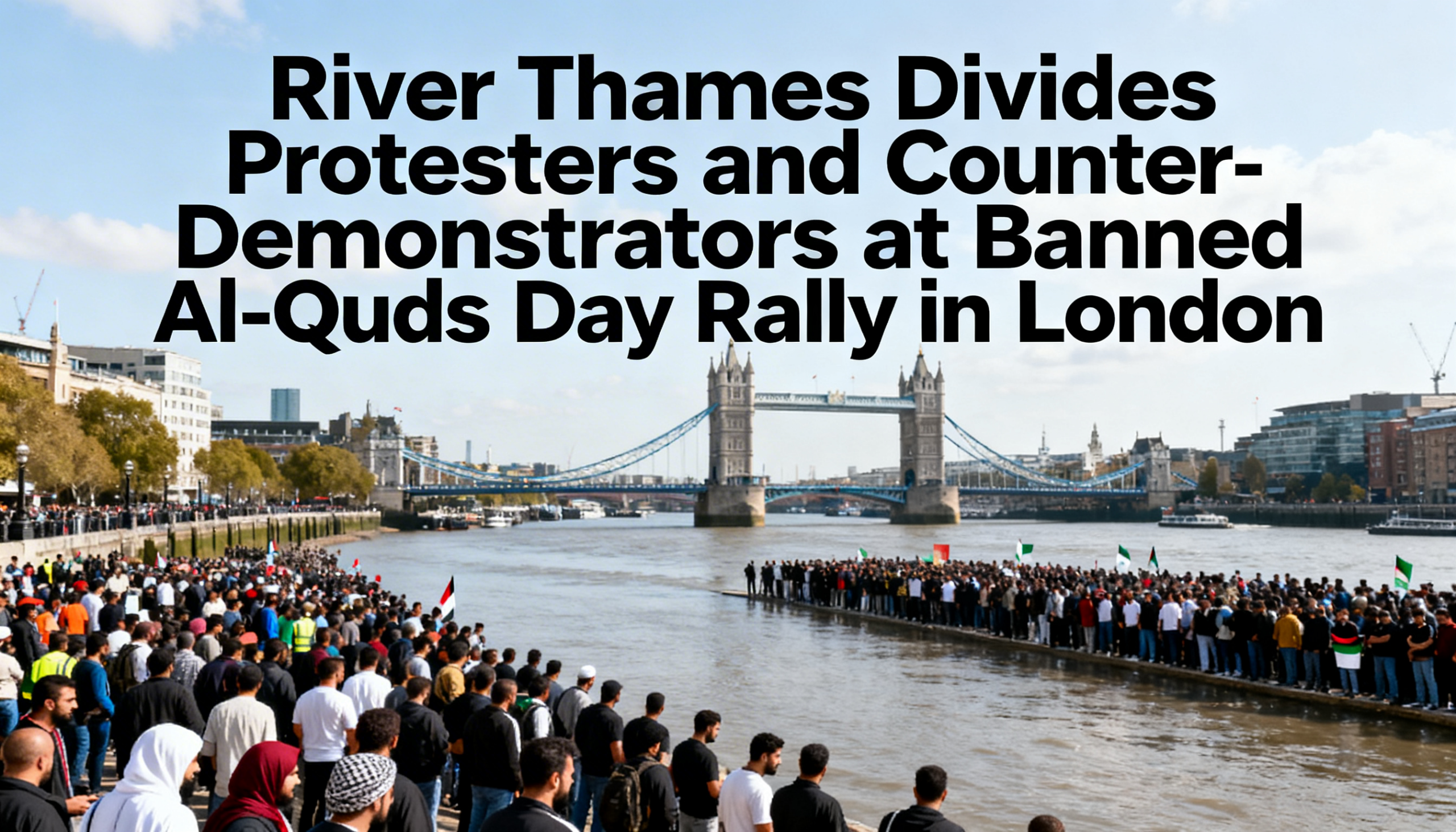
In an unprecedented policing operation on 15 March 2026, the Metropolitan Police utilised the River Thames as a physical barrier to separate participants in the Al-Quds Day static protest from counter-demonstrators in central London. This measure followed the government-approved prohibition of the traditional march, allowing only a stationary gathering amid elevated risks of public disorder linked to the ongoing Middle East conflict involving Iran.
The annual Al-Quds Day demonstration, organised by the Islamic Human Rights Commission (IHRC), has long served as an international expression of solidarity with Palestinians. Police assessments identified the IHRC as supportive of the Iranian regime, a factor compounded by recent geopolitical tensions, including US-Israeli actions against Iran and the reported killing of Supreme Leader Ayatollah Ali Khamenei. Home Secretary Shabana Mahmood approved the Metropolitan Police’s request to ban the procession—the first such restriction on a London march since 2012—citing the potential for serious disorder. A static protest was permitted in its place, confined to the south bank of the River Thames along the Albert Embankment between Lambeth and Vauxhall bridges.
Counter-protests, involving a coalition that included the Jewish-led Stop the Hate group (campaigning against antisemitism), the Lion Guard of Iran, and the Free Iran Coalition, assembled on the north bank at Millbank. Lambeth Bridge was closed to all but emergency vehicles, and marine units supported the separation. Approximately 1,000 officers were deployed across the area, enforcing strict conditions: assemblies were limited to 1pm–3pm, with no marching permitted and zero tolerance for hate speech, support for proscribed organisations, or inflammatory chants such as those advocating “intifada.” Assistant Commissioner Ade Adelekan described the approach as a “new bespoke tactic” necessitated by a “unique set of circumstances,” emphasising that the river provided a clear divide while upholding the right to peaceful protest.
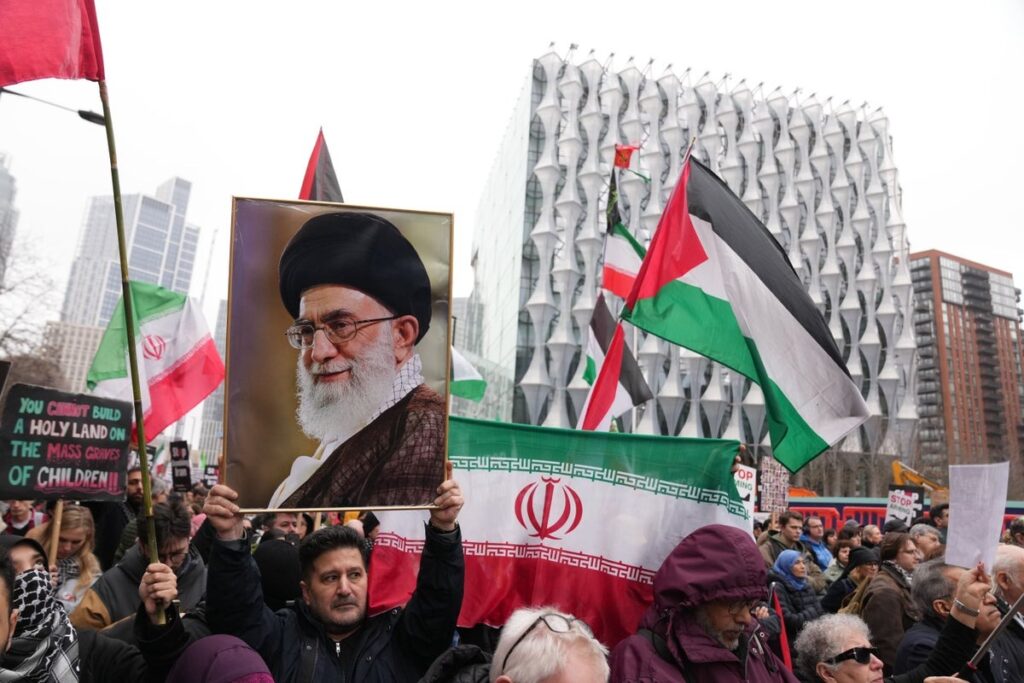
On the ground, the operation maintained order effectively. Protesters on the south bank waved Palestinian flags, held banners, and chanted slogans including “from the river to the sea” and “Israel is a terror state.” Some displayed images of Iranian leaders, including the late Ayatollah Khamenei. Counter-demonstrators on the opposite bank waved Israeli and pre-1979 Iranian flags. No attempts were made to breach conditions, and both groups dispersed peacefully by 3pm. Attendance was significantly lower than pre-event estimates of up to 12,000, a direct result of the restrictions.
Twelve arrests were recorded during the event and associated counter-protest. These included charges for showing support for a proscribed organisation, affray, threatening or abusive behaviour, and dangerous driving. Police are also investigating chants of “death, death to the IDF” reportedly led by musician Bobby Vylan at the south-bank gathering.
Eyewitness accounts illustrated the ideological divide. Georgie Stagg, a 70-year-old long-time participant wearing a Palestinian keffiyeh, remarked that previous Al-Quds marches had been peaceful and criticised the restrictions as an overreach: “We’ve marched on Al-Quds Day for 40 years, and I have never seen any trouble.” On the counter-protest side, Raham Moshami, 52, an Iranian exile who displayed scars from alleged torture, supported the actions against the Iranian government, describing it as “a cancer.” Another pro-Al-Quds attendee, Fereydun Bahrami from Glasgow, characterised the gathering as a “love walk” protesting war: “We love human beings. We love Jewish people.”
The Metropolitan Police confirmed the strategy’s success. Assistant Commissioner Adelekan stated: “Our policing plan worked, with both groups kept apart and we saw no attempts from either side to breach conditions by marching.” The force maintained that the decision did not establish a precedent and would continue to assess future protests on a case-by-case basis.
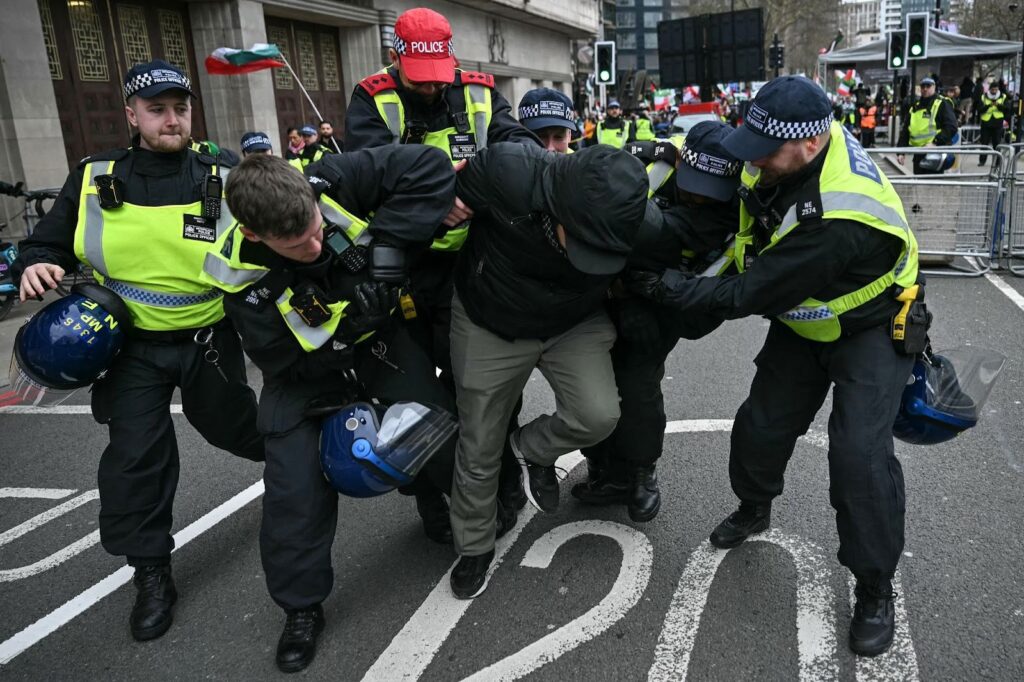
Crowds chant ‘death to the IDF’ at al-Quds rally in London as police arrest protesters at ‘static’ demonstration | The Independent
This innovative deployment of the River Thames as a dividing line represents a significant evolution in public-order policing for ideologically opposed large-scale events. While authorities stressed the measure was tailored to exceptional risks arising from pro-Iran associations and counter-protests amid regional conflict, it demonstrates how natural geography and targeted conditions can mitigate disorder without fully curtailing assembly rights. The approach may inform strategies for future high-tension demonstrations, reinforcing the balance between freedom of expression and the prevention of violence in an increasingly polarised geopolitical landscape. Home Secretary Mahmood reiterated the commitment to applying “the full force of the law” against hatred and division.
The event concluded without escalation, underscoring the effectiveness of proactive, location-specific measures in safeguarding public safety during sensitive protests.