

Metropolitan Police detectives have launched a murder investigation after a 15-year-old boy died following a fatal stabbing in Islington on 9 December 2025. The tragic incident, which occurred in broad daylight on Westbourne Road, has sent shockwaves through the local community and reignited urgent conversations about youth violence and knife crime across London.
The Incident: A Community in Shock
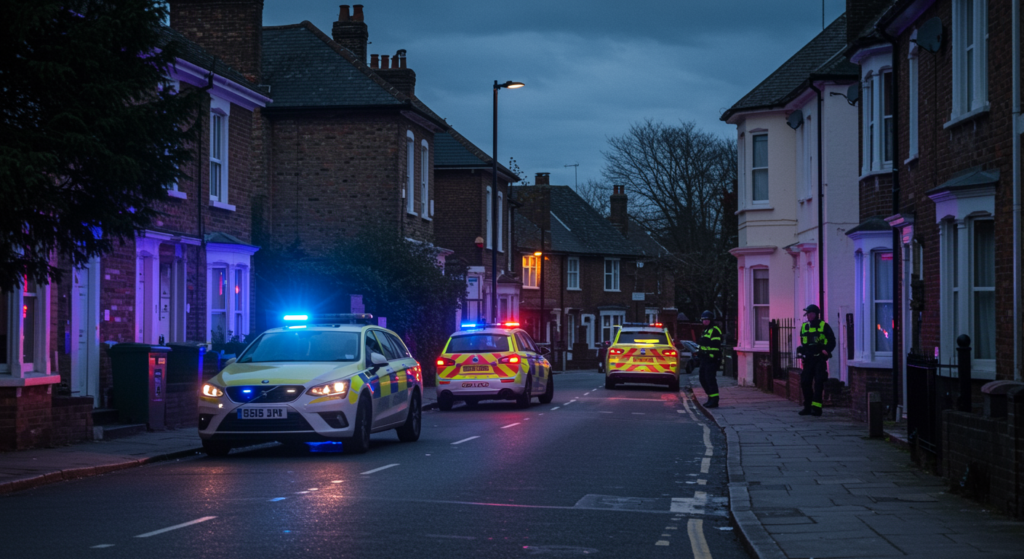
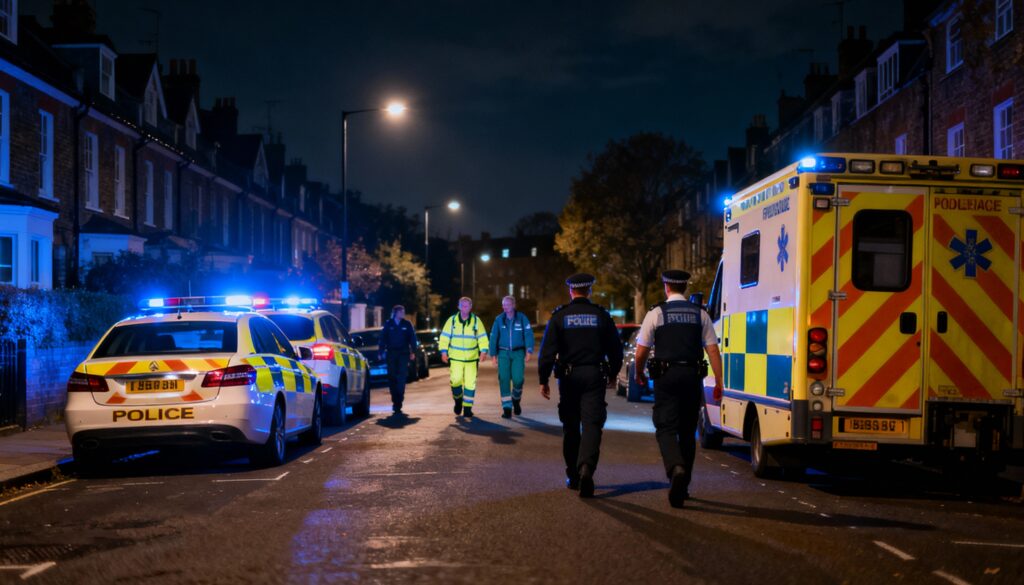
At approximately 13:02 hours on Tuesday, 9 December, officers from the Metropolitan Police were called to reports of a stabbing on Westbourne Road in Islington, north London. The emergency response was swift and comprehensive, with police attending the scene alongside the London Ambulance Service and London’s Air Ambulance, highlighting the severity of the incident.
Paramedics immediately began treating the teenage victim for a stab wound at the scene. Despite their best efforts and the rapid deployment of emergency medical services, the 15-year-old boy was transported to hospital in critical condition. Tragically, medical staff were unable to save his life, and he died later that afternoon.
The victim’s family has been informed of his death and is currently being supported by specialist officers trained to assist bereaved families during such devastating circumstances. The Metropolitan Police have not yet released the identity of the victim, respecting the family’s privacy during this incredibly difficult time.
Police Response and Investigation
Chief Superintendent Jason Stewart, who leads policing in the local area, expressed his condolences and acknowledged the profound impact this incident has had on the community. Speaking shortly after the attack, he stated that the force’s thoughts are with the family and friends of the victim during this incredibly sad and difficult time. He emphasised that the Metropolitan Police understand this is incredibly concerning for the community, particularly considering the young age of the victim.
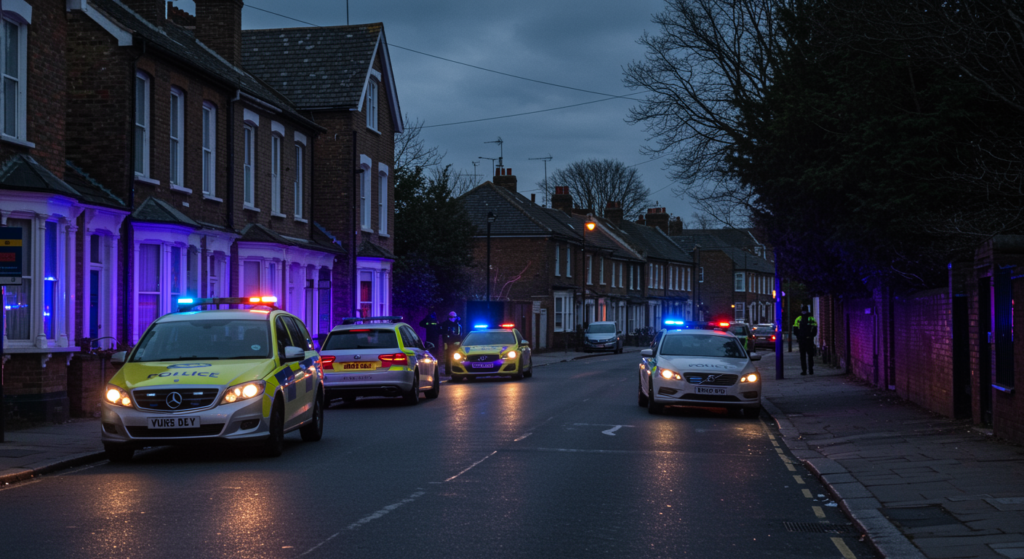
Officers were deployed to Atlas Mews, Westbourne Road, and Arundel Square met to ensure investigators could continue with their urgent enquiries. The crime scene remained cordoned off for several hours as forensic teams conducted a thorough examination of the area, collecting evidence that could prove crucial to the investigation.
As of the latest updates, no arrests have been made in connection with the murder. The Metropolitan Police have issued an urgent appeal for witnesses, asking anyone with information that could assist the investigation to come forward immediately.
How the Public Can Help
The Metropolitan Police are urging anyone who may have witnessed the incident or has any information regarding the attack to contact them on 101, quoting reference CAD 3568/09DEC. For those who wish to remain anonymous, information can be provided to Crimestoppers on 0800 555 111. Even seemingly minor details could prove vital to the investigation and help bring the perpetrator to justice.
Detectives are particularly interested in speaking with anyone who was in the Westbourne Road area between 12:30 and 13:30 on Tuesday, 9 December. They are also appealing for any dashcam footage, doorbell camera recordings, or mobile phone videos that may have captured activity in the area around the time of the incident.
Community Reaction and Support
The local community has been left reeling from the tragedy. Councillor Una O’Halloran, Leader of Islington Council, expressed the borough’s shock and sadness at the loss of such a young life. In a statement released shortly after the incident, she confirmed that the council would be working closely with the Metropolitan Police to support their investigation and doing everything possible to reassure the local community in the coming days.
The incident has particularly unsettled residents in the Westbourne Road area, a mixed commercial and residential street in Islington. Local residents have described their shock at such violence occurring in their neighbourhood during daylight hours, with many expressing concerns about the safety of young people in the area.
Knife Crime in Islington: The Broader Context
This tragic death adds to the ongoing challenge of knife crime that London, and Islington in particular, continues to face. Between 2016 and 2023, knife crime rose 54% in London, increasing from 9,086 incidents to 14,000 Wikipedia, although recent figures suggest levels have begun to stabilise.
Islington has historically struggled with crime rates higher than the London average. As of 2025, the crime rate in Islington is 26% higher than London and 35% higher than England, Wales, and Northern Ireland overall crimerate. The borough ranks amongst the top 10 most dangerous areas in London, with an overall crime rate of 98 crimes per 1,000 people.
However, there have been some positive developments in recent years. Islington experienced a drop in knife crimes, going from 436 to 398 wunderlustlondon in recent reporting periods, suggesting that intervention programmes and policing strategies may be having some effect. Nevertheless, this latest tragedy demonstrates that the borough still faces significant challenges in protecting its young people from knife violence.
The Youth Violence Crisis in London
As of 2025, the majority of knife-enabled offences are robbery, accounting for 60% of offences, and victims are predominantly male, with about half being under 25 Wikipedia. This statistic underscores the particular vulnerability of young people to knife crime and highlights why this latest incident has caused such concern.
The death of the 15-year-old boy on Westbourne Road represents not just a statistic but a young life cut tragically short, a family devastated, and a community left to grapple with questions about how such violence can be prevented in the future.
Youth knife crime has complex root causes, including socio-economic factors, gang involvement, lack of youth services, and the ready availability of knives. Addressing these issues requires a multi-faceted approach involving law enforcement, education, social services, and community engagement.
What Authorities Are Doing
The Metropolitan Police operate several specialist operations focused on tackling knife and gun crime across London. These include Operation Trident and Trafalgar, which deal with fatal and non-fatal shootings, and Operation Blunt, which specifically targets knife crime. These operations use intelligence-led policing, stop and search powers, and community engagement to identify and disrupt criminal activity before it leads to violence.
Islington Council has also been working closely with partners, including the police and voluntary sector organisations, to tackle knife crime across the borough. Their approach recognises that perpetrators can also be victims and adopts a trauma-informed approach that balances support with enforcement. Services such as Targeted Youth Support, parenting programmes, and educational initiatives run by organisations like the Ben Kinsella Trust aim to educate young people about knife harm and how to stay safe.
The Mayor of London has implemented various strategies to combat knife crime, including tagging offenders with GPS tracking devices upon release from prison and investing in youth services and early intervention programmes. Despite these efforts, the challenge remains significant, as evidenced by this latest tragic incident.
Preventing youth violence requires intervention long before a young person picks up a knife. This includes providing adequate youth services, mental health support, educational opportunities, and positive role models. Many experts argue that cuts to youth services over the past decade have contributed to rising levels of youth violence, as young people have fewer safe spaces and constructive activities available to them.
Schools also play a crucial role in educating young people about the dangers of knife crime and providing support to those who may be at risk of involvement in violence. Many London schools now include knife crime awareness as part of their personal, social, and health education curricula.
Beyond the immediate tragedy for the victim’s family, knife crime has far-reaching effects on entire communities. Residents may feel less safe in their neighbourhoods, parents worry about their children’s safety, and young people themselves may feel pressured to carry knives for protection, perpetuating a dangerous cycle.
The economic cost is also substantial. Violent crime in London is estimated to cost approximately £7 billion each year, with a significant portion attributable to knife-related incidents. This includes not only immediate costs such as emergency services and healthcare but also longer-term impacts on mental health, productivity, and community wellbeing.
Moving Forward: Calls for Action
This latest tragedy has intensified calls for more comprehensive action to tackle youth violence in London. Community leaders, politicians, and activists are urging investment in prevention programmes, increased youth services, tougher penalties for knife possession, and greater efforts to tackle the root causes of violence.
Some argue for a public health approach to knife crime, treating it as an epidemic that requires coordinated action across multiple sectors rather than solely as a law enforcement issue. This approach, successfully implemented in Scotland, focuses on early intervention, education, and supporting at-risk young people rather than relying primarily on criminal justice responses.
For those affected by this tragedy or concerned about knife crime in their community, support services are available. Victim Support provides free and confidential help to victims of crime and their families. The Ben Kinsella Trust offers support and educational resources for young people and families affected by knife crime. Local authorities also provide various services and can direct people to appropriate support.
Young people who are worried about their own safety or that of friends can speak confidentially to organisations such as Childline or the NSPCC. It’s crucial that young people feel they can seek help without fear of judgement or repercussions.
The fatal stabbing of a 15-year-old boy in Islington on 9 December 2025 represents another heart-breaking loss of young life to knife crime. As the Metropolitan Police continue their investigation and the community mourns, this tragedy serves as a stark reminder of the urgent need for comprehensive action to protect young people from violence.
Whilst there have been some positive developments in tackling knife crime in London, with overall levels showing signs of stabilisation and some boroughs reporting reductions, the death of this teenager demonstrates that much work remains to be done. The investigation continues, and the hope remains that justice will be served for the victim and his family.
The community’s response in the coming weeks and months will be crucial. By working together—police, local authorities, schools, families, and young people themselves—there is hope that future tragedies can be prevented and that London’s young people can grow up in safer communities.
Anyone with information about the incident on Westbourne Road is urged to contact the Metropolitan Police on 101 or Crimestoppers anonymously on 0800 555 111. Every piece of information, no matter how small it may seem, could be vital in bringing those responsible to justice and providing answers to a grieving family.