
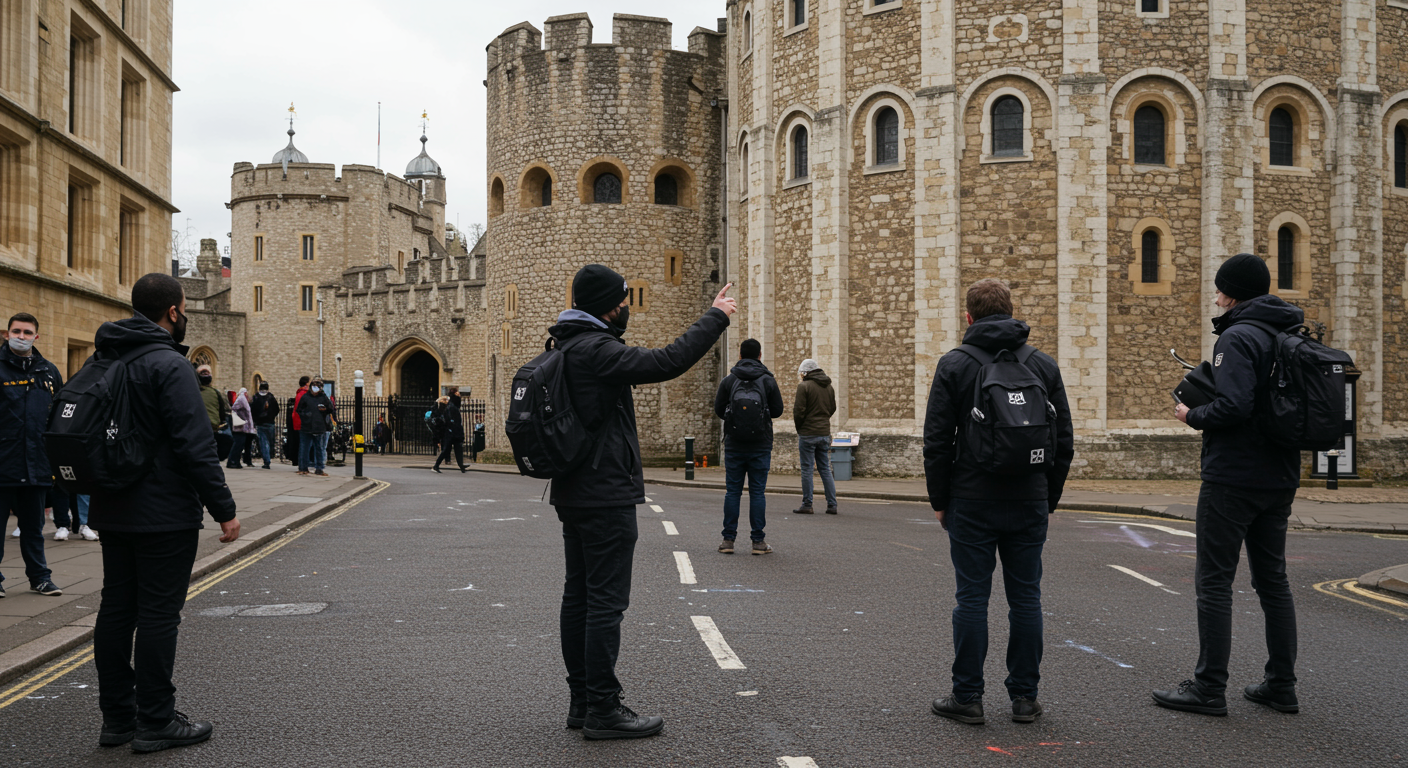
Four individuals have been arrested on suspicion of criminal damage following an extraordinary protest at the Tower of London on 6 December 2025, during which custard and apple crumble were thrown at the protective display case housing Britain’s Crown Jewels. The demonstration, which has sparked widespread debate across the United Kingdom, forms part of a growing campaign calling for the establishment of a citizens’ assembly to address wealth taxation reform.
The Incident at the Tower of London
The attack occurred during regular visiting hours at the historic fortress, one of Britain’s most visited tourist attractions and home to the priceless Crown Jewels collection. Witnesses reported that members of the group bypassed standard security cordons before hurling the desserts at the reinforced glass case containing the crown, orb, and sceptre used in coronation ceremonies for centuries.
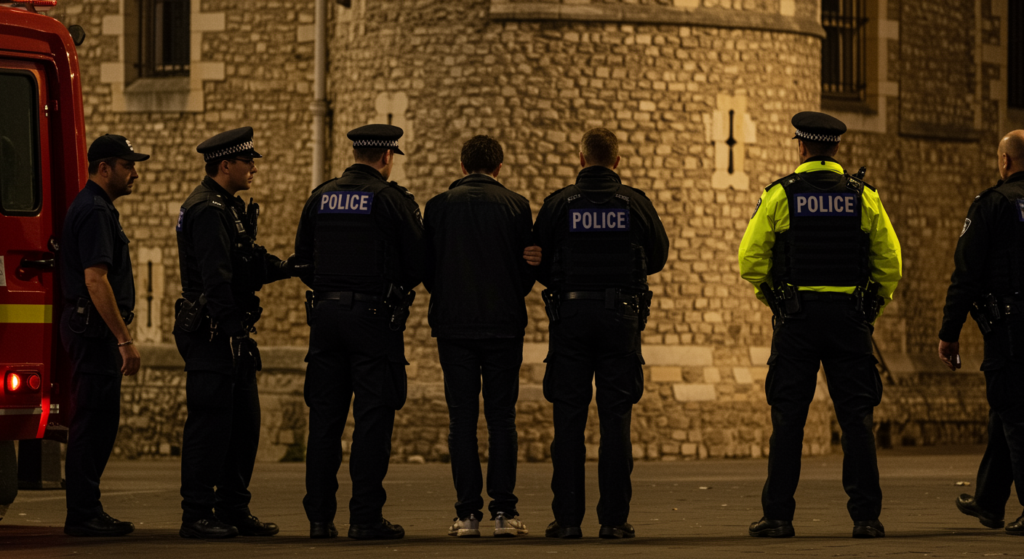
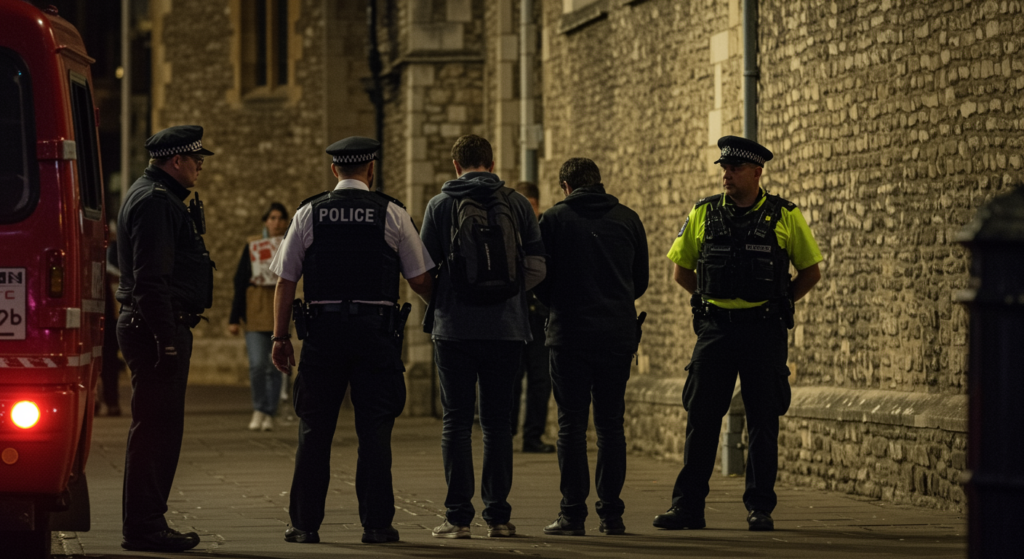
Metropolitan Police officers responded swiftly to the incident, apprehending the four suspects at the scene. The individuals, whose identities have not yet been released pending formal charges, were taken into custody at a central London police station. Authorities have confirmed that whilst the protective case sustained minor staining, the Crown Jewels themselves remain undamaged and secure.
Historic Royal Palaces, the independent charity responsible for managing the Tower of London, temporarily closed the Jewel House to visitors whilst conservation staff assessed the situation. The attraction reopened later that afternoon following a thorough inspection and cleaning of the display area.
The Protesters’ Demands
The demonstration represents the latest action in an escalating campaign focused on economic inequality in Britain. The group behind the protest has issued statements calling for the immediate establishment of a citizens’ assembly specifically tasked with examining and reforming the country’s wealth taxation system.
Citizens’ assemblies, which bring together randomly selected members of the public to deliberate on complex policy issues, have gained traction in recent years as a means of democratic engagement beyond traditional parliamentary structures. Supporters argue that such bodies can provide balanced, informed recommendations on contentious subjects whilst removing partisan political interests from the equation.
The protesters contend that Britain’s current tax structure disproportionately benefits the wealthy whilst placing undue burden on working and middle-class families. They point to growing wealth inequality, rising living costs, and what they describe as inadequate taxation of assets, property, and inherited wealth.
In materials distributed before the action, the group highlighted statistics showing that the wealthiest 10 per cent of British households control nearly half of the nation’s total wealth, whilst the bottom 50 per cent possess less than 10 per cent. They argue that more progressive taxation policies could fund essential public services, address the cost-of-living crisis, and reduce social inequality.
Public and Political Reaction
Response to the protest has been sharply divided along predictable lines. Critics have condemned the action as vandalism that disrespects national heritage and undermines legitimate political discourse. Conservative politicians and commentators have characterised the incident as an attack on British institutions and history, with several MPs calling for severe penalties for those involved.
“Targeting the Crown Jewels is not protest—it’s criminal damage of our shared heritage,” stated one backbench Conservative MP. “These objects represent centuries of British history and belong to the nation. Such actions only alienate the public from whatever cause these individuals claim to represent.”
Tourism industry representatives have expressed concern about the incident’s potential impact on visitor confidence, particularly given the Tower of London’s status as a UNESCO World Heritage Site and major economic contributor to the capital.
However, others have urged a more nuanced examination of the underlying issues. Progressive politicians, economists, and civil society organisations have called for serious engagement with questions of wealth inequality and tax reform, even whilst not endorsing the protesters’ methods.
“Whilst I cannot condone criminal damage, we must acknowledge the legitimate frustration driving such actions,” commented a Labour backbencher. “Wealth inequality in Britain has reached unconscionable levels. Perhaps instead of simply condemning protesters, we should address the systemic issues that prompt such desperate measures.”
The Citizens’ Assembly Proposal
The concept of a citizens’ assembly on wealth taxation has been circulating in policy circles for several years. Proponents argue that the complexity and political sensitivity of tax reform make it an ideal candidate for deliberative democratic processes.
Under typical models, a citizens’ assembly would comprise 50 to 150 randomly selected individuals, demographically representative of the broader population. These participants would receive expert briefings from economists, tax specialists, and stakeholders representing diverse perspectives. Following weeks of deliberation, the assembly would produce recommendations for policymakers.
Ireland successfully employed a citizens’ assembly to address contentious constitutional questions, including issues surrounding abortion and same-sex marriage. Scotland has also experimented with the format on climate change policy. Advocates suggest that Britain could benefit from similar approaches to politically fraught economic questions.
The wealth taxation debate encompasses numerous complex issues: inheritance tax reform, capital gains taxation, property taxes, wealth taxes on high-net-worth individuals, and taxation of trusts and offshore assets. A citizens’ assembly could potentially provide politically viable pathways forward on these divisive subjects.
Sceptics question whether randomly selected citizens possess sufficient expertise to make informed recommendations on highly technical tax policy. Others worry that such bodies could be manipulated or that their recommendations might be ignored by elected officials, ultimately proving merely symbolic.

Historical Context of Protest Tactics
The custard-and-crumble attack represents the latest iteration of attention-grabbing protest tactics employed by activist groups in recent years. Environmental campaigners have thrown soup at Van Gogh’s “Sunflowers,” glued themselves to artworks, and blocked motorways, whilst other causes have employed similarly disruptive methods.
These tactics deliberately generate controversy, ensuring media coverage and public debate that conventional protests might not achieve. Organisers argue that incremental change through standard political channels has proven inadequate given the urgency and scale of issues like climate change and inequality.
Critics counter that such methods alienate potential supporters, damage the protesters’ credibility, and shift focus from substantive issues to the disruption itself. Polling suggests that whilst many Britons agree with certain activist causes in principle, majorities disapprove of disruptive protest tactics.
The debate reflects broader tensions about effective advocacy in contemporary democracies. As traditional media gatekeepers fragment and political institutions face declining public trust, activists increasingly employ spectacular actions designed to penetrate crowded information environments.
Legal Implications and Potential Penalties
Those arrested face potential charges of criminal damage, which carries varying penalties depending on the extent of harm caused. If the damage to the display case is valued below £5,000, the offence would typically be tried summarily in magistrates’ court, with maximum penalties including fines and community orders. More serious damage could result in Crown Court proceedings and potential imprisonment.
Prosecutors must also consider whether any aggravating factors apply, such as targeting nationally significant heritage assets or premeditated group action. Conversely, defence solicitors may argue for leniency based on the protesters’ motivations and absence of violence.
The case may also raise questions about protest rights and proportionality in sentencing. European Convention on Human Rights provisions protecting freedom of expression and assembly could feature in legal arguments, though courts typically afford limited protection to property damage even in protest contexts.
Broader Implications for Heritage Sites and Security
The incident has prompted immediate reviews of security protocols at Britain’s historic attractions. Whilst the Crown Jewels themselves remain protected behind reinforced glass capable of withstanding significant force, the ease with which protesters approached the display has raised concerns.
Historic Royal Palaces and similar organisations now face the challenge of maintaining accessible, welcoming environments for millions of annual visitors whilst preventing future incidents. Enhanced security measures could include additional physical barriers, increased staff presence, and improved surveillance systems.
However, heritage professionals worry that overly aggressive security might diminish visitor experience and contradict the educational missions of cultural institutions. Finding appropriate balance between protection and accessibility presents ongoing challenges.
Conclusion
The custard-and-crumble attack on the Crown Jewels represents far more than simple vandalism. It reflects profound frustrations with economic inequality, perceived democratic deficits, and the apparent intractability of wealth taxation reform through conventional political channels.
Whether such tactics ultimately advance or hinder the protesters’ cause remains uncertain. What seems clear is that questions surrounding wealth distribution, taxation fairness, and democratic engagement will continue dominating British political discourse. How institutions respond—whether with mere condemnation or genuine engagement with underlying concerns—may determine whether such protests escalate or subside.
As Britain grapples with economic pressures, social divisions, and questions about its democratic future, the humble custard and apple crumble have become unlikely symbols of deeper national conversations about wealth, power, and justice.