
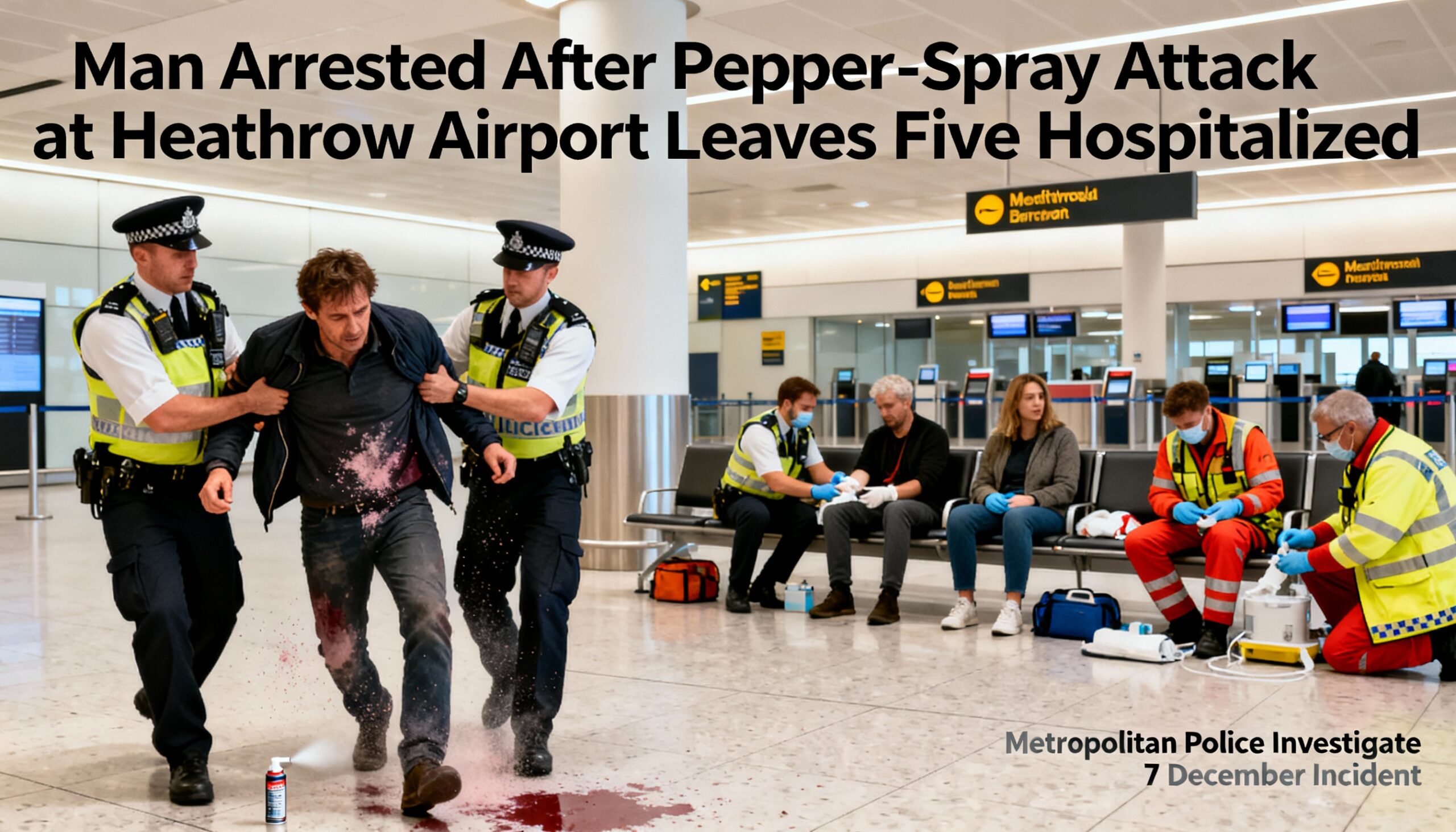
A troubling incident at one of the world’s busiest airports has raised fresh concerns about public safety in transport hubs. On 7 December 2025, Heathrow Airport became the scene of a pepper-spray attack that left five individuals requiring hospital treatment and prompted a swift response from the Metropolitan Police.
The Incident Unfolds
The attack occurred at Heathrow Airport, Britain’s largest and busiest aviation facility, which handles over 80 million passengers annually. According to initial reports from the Metropolitan Police, several people were believed to have been pepper-sprayed in what appears to have been a deliberate assault. The incident resulted in five victims being transported to hospital for medical treatment, though the full extent of their injuries has not been disclosed to the public.
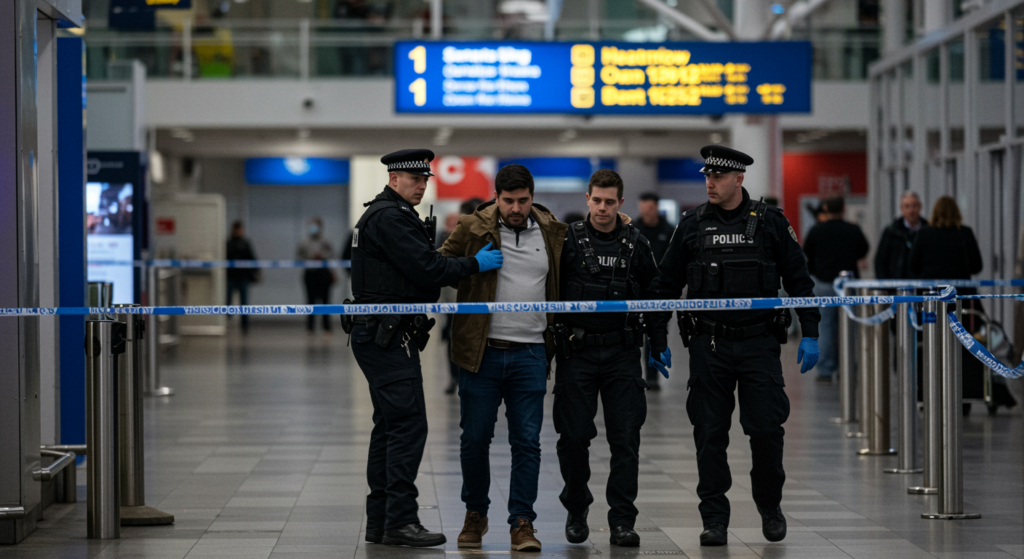
Law enforcement officers responded rapidly to the emergency call, and a man was subsequently arrested in connection with the attack. The suspect remains in police custody whilst investigators work to establish the full circumstances surrounding the incident and determine what motivated the assault.
Immediate Response and Investigation
The Metropolitan Police have confirmed they are conducting a thorough investigation into the circumstances of the attack. Airport security protocols were immediately activated following the incident, with affected areas being secured and assessed by specialist officers. Emergency medical services attended the scene promptly, providing initial treatment to victims before transporting the five most seriously affected individuals to nearby hospitals.
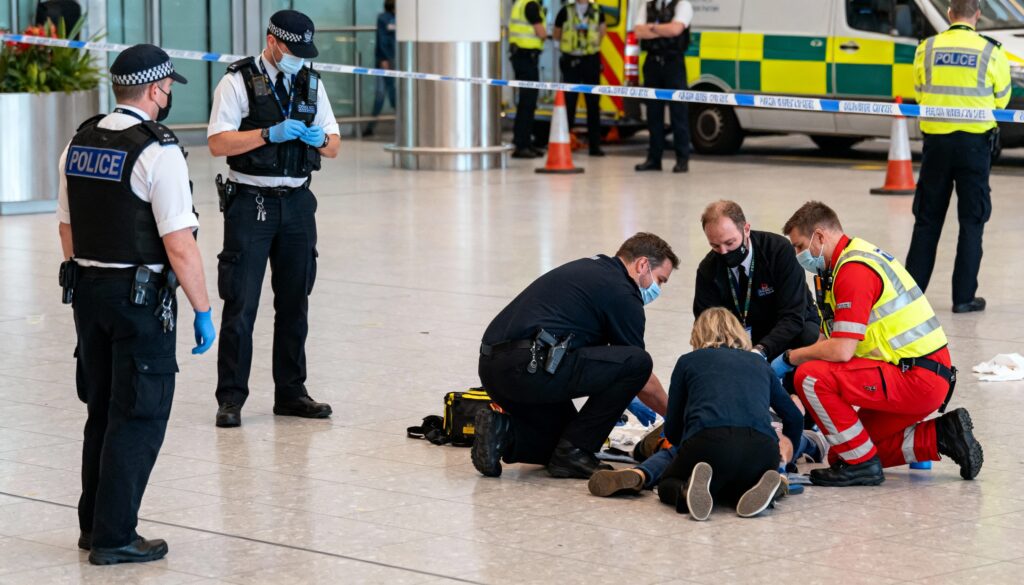
Witnesses described scenes of confusion and distress as the incident unfolded, with passengers and airport staff seeking to understand what had occurred. The rapid deployment of security personnel helped contain the situation and prevent further escalation, though the incident inevitably caused disruption to normal airport operations.
Airport authorities have been working closely with the Metropolitan Police throughout the investigation, reviewing CCTV footage and gathering witness statements to piece together a comprehensive picture of events. Heathrow’s extensive security infrastructure, which includes thousands of cameras and multiple security checkpoints, is expected to provide valuable evidence for investigators.
Security Implications for Major Transport Hubs
This incident at Heathrow highlights the ongoing security challenges faced by major transport hubs worldwide. Despite stringent security measures, including passenger screening and constant surveillance, airports remain vulnerable to attacks that occur in publicly accessible areas before security checkpoints.
Pepper spray, also known as OC spray (oleoresin capsicum), is classified as a prohibited weapon in the United Kingdom. Possession of such items is illegal under the Firearms Act 1968, and those found carrying pepper spray can face arrest and prosecution. The substance causes immediate inflammation of the eyes, respiratory difficulties, and intense discomfort, making it a dangerous weapon in crowded public spaces.
The use of such a weapon in an airport environment is particularly concerning given the high concentrations of people in confined spaces. Terminal buildings, with their enclosed atmospheres and dense crowds, can amplify the effects of chemical irritants, potentially affecting far more individuals than initially targeted.
Historical Context of Airport Security Incidents
Whilst physical attacks using chemical irritants at British airports are relatively rare, transport hubs have long been recognised as potential targets for various forms of criminal activity and terrorism. The aviation industry has invested billions of pounds in security infrastructure since the September 11 attacks, with particular focus on preventing weapons and explosives from being brought onto aircraft.
However, incidents in publicly accessible areas—often referred to as the “landside” portions of airports—present different security challenges. These areas, which include check-in halls, arrival lounges, and terminal concourses, must balance accessibility for legitimate travellers with protection against potential threats.
Previous incidents at airports worldwide have prompted ongoing reassessments of security protocols. The 2016 Brussels Airport attack and the 2017 Fort Lauderdale Airport shooting both occurred in publicly accessible areas, leading to enhanced security measures at transport hubs globally.
Impact on Airport Operations and Passengers
The immediate aftermath of the incident undoubtedly caused disruption to normal airport operations, though the full extent of delays and cancellations has not been widely reported. Heathrow, which operates at near-maximum capacity during most periods, is particularly vulnerable to knock-on effects from security incidents.
Passengers scheduled to travel through Heathrow on the day of the incident may have experienced delays as security services conducted their initial response and investigation. Airport authorities typically implement enhanced security protocols following such incidents, which can lead to longer queuing times and additional screening procedures.
The psychological impact on witnesses and victims of the attack should not be underestimated. For many travellers, airports represent the beginning of holidays or important business trips, and experiencing or witnessing violence can have lasting effects on individuals’ sense of security and wellbeing.
The Role of Metropolitan Police
The Metropolitan Police, which has jurisdiction over Heathrow Airport, maintains a dedicated aviation security unit trained to respond to incidents at London’s airports. These specialist officers work alongside airport security personnel and possess expertise in counter-terrorism, crowd control, and emergency response procedures.
The investigation into the pepper-spray incident will likely involve multiple specialist units, including forensic teams, witness liaison officers, and possibly counter-terrorism experts if any broader plot is suspected. The arrested individual will be questioned extensively to determine his motives and whether he acted alone or as part of a larger conspiracy.
Under British law, the suspect can be held for up to 24 hours without charge, though this period can be extended with judicial approval if investigators require additional time. The Crown Prosecution Service will ultimately decide whether sufficient evidence exists to bring formal charges against the arrested man.
Public Safety Measures and Future Prevention
This incident serves as a reminder of the importance of vigilance in public spaces, particularly in busy transport hubs. Airport authorities and police forces continually review and update security protocols to address emerging threats whilst maintaining the flow of legitimate passengers and commerce.
Enhanced training for security personnel in recognising suspicious behaviour and responding to chemical attacks represents one avenue for improving preparedness. Additionally, technological solutions, including improved ventilation systems and chemical detection equipment, may play increased roles in future security architectures.
Public awareness campaigns encouraging travellers to report suspicious activity remain a crucial component of security strategies. The principle of “see it, say it, sorted” emphasises the role ordinary citizens play in maintaining security through alertness and prompt reporting of concerns.
Recovery and Support for Victims
The five individuals hospitalised following the attack will require not only medical treatment for their physical injuries but potentially psychological support as well. The National Health Service provides comprehensive care for victims of violent crime, including specialist trauma services where required.
Victim support organisations, including government-funded charities and voluntary groups, offer assistance to those affected by violent incidents. These services can include counselling, practical advice on dealing with police investigations, and help navigating any compensation claims that may be available.
Airport authorities and airlines also typically provide support to passengers affected by security incidents, though the specific arrangements in this case have not been publicly detailed.
Conclusion
The pepper-spray incident at Heathrow Airport on 7 December 2025 represents a serious breach of public safety at one of Britain’s most important transport hubs. Whilst the swift arrest of a suspect demonstrates the effectiveness of security responses, the incident raises important questions about protecting publicly accessible areas of airports from violent attacks.
As the Metropolitan Police investigation continues, more details about the circumstances, motives, and potential connections of the attack will likely emerge. The incident serves as a sobering reminder that constant vigilance and robust security measures remain essential components of modern aviation infrastructure.
For the five individuals hospitalised and the many more who witnessed the frightening scenes, the incident will have lasting personal impacts. The broader travelling public will be watching closely to see what lessons are learned and what additional measures might be implemented to prevent similar incidents in future.