
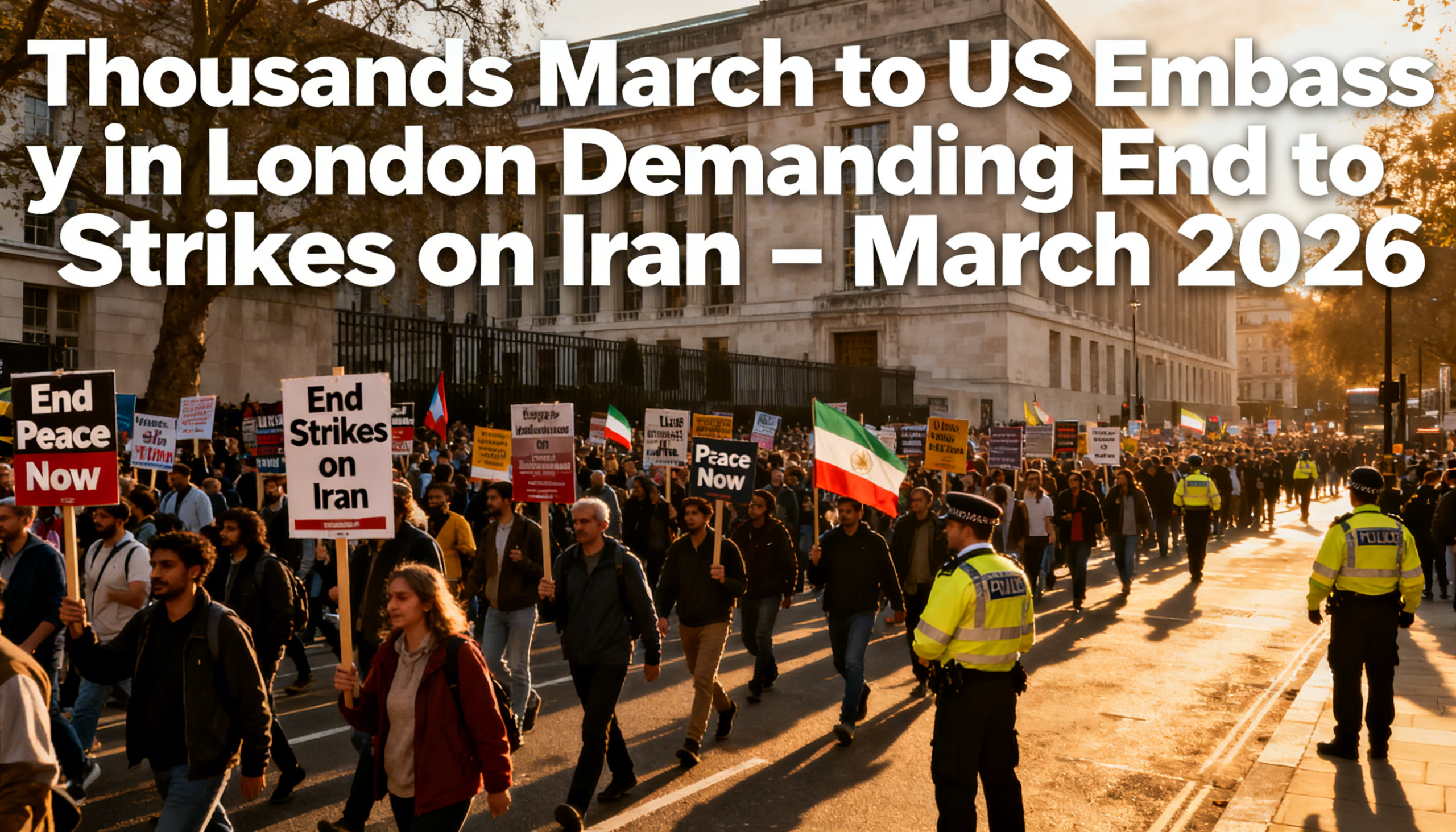
On March 7, 2026, thousands of demonstrators participated in a protest march in London directed toward the United States Embassy, demanding an immediate cessation of U.S. and Israeli military strikes on Iran. The event, organized under the banner “Hands Off Iran” and coordinated by a coalition of groups including the Campaign for Nuclear Disarmament (CND), Stop the War Coalition, Palestine Solidarity Campaign, Muslim Association of Britain, Palestinian Forum in Britain, and Friends of Al-Aqsa, occurred amid the ongoing 2026 Iran war, which commenced with joint U.S.-Israeli airstrikes on February 28, 2026.
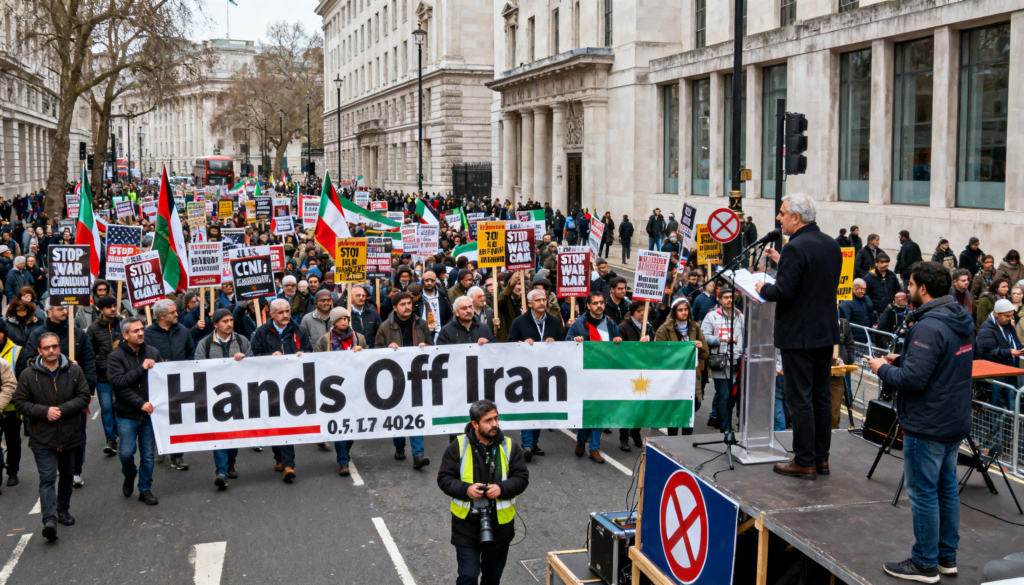
The march assembled at Millbank, near Westminster, specifically in the vicinity of Victoria Tower Gardens. Participants then proceeded through central London, crossing the River Thames, and concluded at the U.S. Embassy located in Nine Elms, Vauxhall (Wandsworth). Estimates of attendance varied: organizers claimed figures exceeding 50,000, while Metropolitan Police reports indicated between 5,000 and 6,000 participants. Protesters displayed Iranian and Palestinian flags, carried portraits of the late Iranian Supreme Leader Ayatollah Ali Khamenei, and held placards bearing slogans such as “Stop Bombing Iran,” “Hands Off Iran,” “Stop Trump’s Wars,” “No War on Iran,” and “Stop Arming Israel.” Chants included calls to halt the bombing and criticisms of Western involvement in the conflict.
Speeches delivered outside the embassy emphasized opposition to the strikes and broader regional escalation. Notably, Zarah Sultana, Member of Parliament for the Your Party, addressed the crowd, stating that “we will not be ignored again” and underscoring the protesters’ resolve.
This demonstration formed part of a larger wave of anti-war protests in the United Kingdom and internationally, linked to concerns over the Middle East conflict’s expansion following the strikes, which targeted Iranian military infrastructure, nuclear-related sites, and leadership, resulting in significant casualties and regional instability. The event reflected connections to ongoing solidarity movements, including those concerning Palestine and opposition to arms sales supporting involved parties.
Police management involved substantial deployment to maintain order, with street closures implemented along the route. The Metropolitan Police described the gathering as largely peaceful, though four arrests occurred in connection with related incidents, including suspicions of inciting racial hatred, possession of an offensive weapon, racially aggravated public order offenses, and violent disorder.
Geopolitically, the protest highlighted mounting domestic pressure on the UK government under Prime Minister Keir Starmer. Critics accused the administration of aligning too closely with U.S. policy, potentially complicating Britain’s foreign policy stance in the Middle East. The demonstration underscored divisions in public opinion regarding UK involvement or support for actions that risk broader escalation, including threats to global energy routes such as the Strait of Hormuz, and raised questions about balancing alliances with calls for de-escalation and diplomatic resolution.